REVIEW · PRIVATE DRIVERS
Vancouver to Victoria Scenic Seaplane Transfer: One Way
Book on Viator →Operated by Harbour Air Ltd · Bookable on Viator
If you want Victoria fast, this is the kind of plan that works. This one-way seaplane transfer swaps a long ferry day for a short flight, with top-floor views of Vancouver from the air. I especially like the quick door-to-water routine at Harbour Air, plus how the flight route gives you angles of Stanley Park and the downtown waterfront that you simply do not get from the road. One drawback to consider: you’re paying a premium for speed, and seats on small seaplanes can feel tight.
The whole experience runs about 35 minutes in the air, with you starting at Harbour Air’s Vancouver terminal in Coal Harbour. Check in early, keep an eye on baggage weight, and you’ll have a smooth, straightforward way to reach Victoria’s Inner Harbour without spending half a day in transit.
In This Review
- Key points worth knowing before you go
- Why fly one-way by seaplane instead of ferrying it?
- Vancouver Harbour check-in: Coal Harbour is the easy start
- The 35-minute flight: what you actually see from the air
- Seats, ear comfort, and photo strategy (yes, bring a plan)
- Landing in Victoria: Inner Harbour access beats most arrivals
- Baggage, ID, and the real-world rules you’ll want to follow
- Baggage
- Identification
- No hotel pickup
- Return trip isn’t included
- Price and value: $292.93 is steep, but it can make sense
- Weather timing: how to protect your Victoria plans
- Who this one-way seaplane transfer fits best
- Should you book this one-way seaplane transfer?
- FAQ
- How long is the one-way seaplane flight from Vancouver to Victoria?
- Where do I meet for the Vancouver departure, and where do I land in Victoria?
- When should I check in for departure?
- What baggage allowance is included?
- Is hotel pickup included?
- Is the return trip to Vancouver included?
- What identification do I need for check-in?
- What happens if weather affects the flight?
Key points worth knowing before you go
- Coal Harbour to Inner Harbour access: Both terminals sit right in the downtown waterfront zones, so you lose less time than with ferry terminals and long transfers.
- A small-group feel: The maximum group size is 14 passengers, which usually means quicker boarding and less crowding.
- You get real aerial “how is that even possible?” views: Think Burrard Inlet, downtown Vancouver, Stanley Park (including Totem Poles and Lost Lagoon), and the North Shore Mountains.
- Gulf Islands sightings on the way: The flight can pass over Salt Spring Island, Galiano Island, and Pender Island, if conditions allow.
- Baggage is simple, but weight matters: 25 lbs (11 kg) is guaranteed for all bags, including purses; excess is handled space-available at $3/lb.
- Weather can affect timing: This is a weather-dependent operation, so it’s smart to plan Victoria activities with some slack.
Why fly one-way by seaplane instead of ferrying it?
The Vancouver-to-Victoria ferry route can take more than three hours once you add in the whole travel chain. A direct seaplane flips that equation. In about 35 minutes, you trade waiting time for actual time on the ground in Victoria.
For me, the big value isn’t just the flight—it’s what it buys you. If you’re on a tight schedule, that extra time matters. It can turn a rushed day trip into a more relaxed first half-day where you can actually walk the Inner Harbour, find a good meal, and still have energy left.
Yes, it costs more than most ground options. But you’re paying for three things at once: speed, a downtown-to-downtown style start and finish, and a view you can’t replicate with a car window.
You can also read our reviews of more tours and experiences in Vancouver


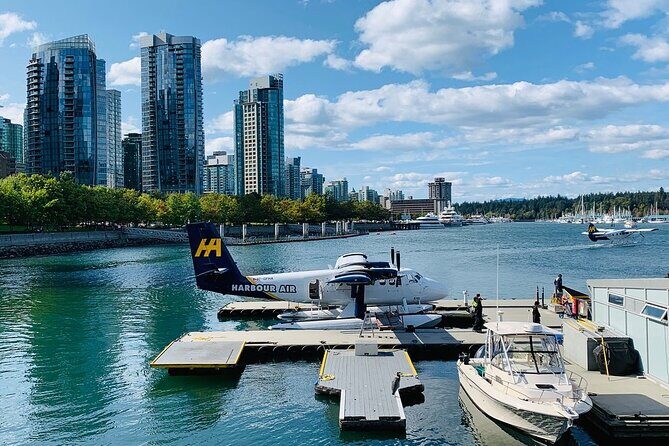
Vancouver Harbour check-in: Coal Harbour is the easy start
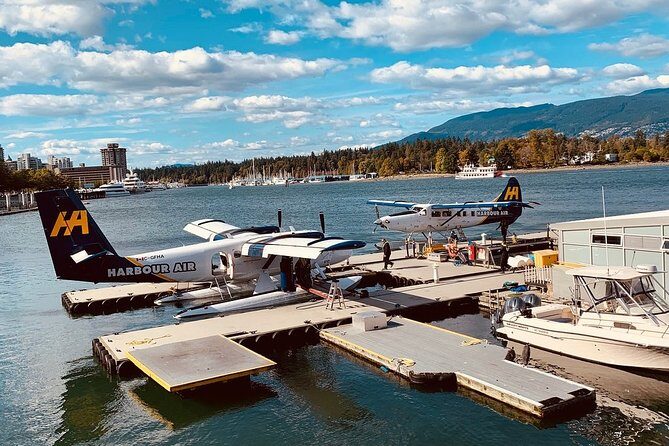
Your journey begins at Harbour Air – Vancouver at 1055 Canada Place, Vancouver. The location is in Coal Harbour, steps from major waterfront landmarks like Canada Place and the Vancouver Convention Centre area, plus the Jack Poole Plaza zone (the Olympic Cauldron sits here).
What makes this start feel practical is that it’s embedded in the city’s downtown waterfront, not out in the fringes. If you’re already staying near downtown hotels, you’ll waste less time getting to the terminal than you would with many regional transfers.
Plan your timing around their check-in rhythm. You should arrive at the terminal at least 40 minutes before departure, and be fully checked-in 20 minutes before boarding. If you miss those cutoffs, you won’t be able to board your scheduled flight, and you won’t get a refund.
A small-group detail also helps: the max is 14 passengers, so check-in and boarding tend to move briskly.
Packing tip I take seriously here: confirm your bag weight before you go. The allowance is 25 lbs / 11 kg guaranteed, and it includes all baggage, including purses. Over that, excess baggage is on a space-available basis and charged at $3 per extra pound at check-in.
The 35-minute flight: what you actually see from the air
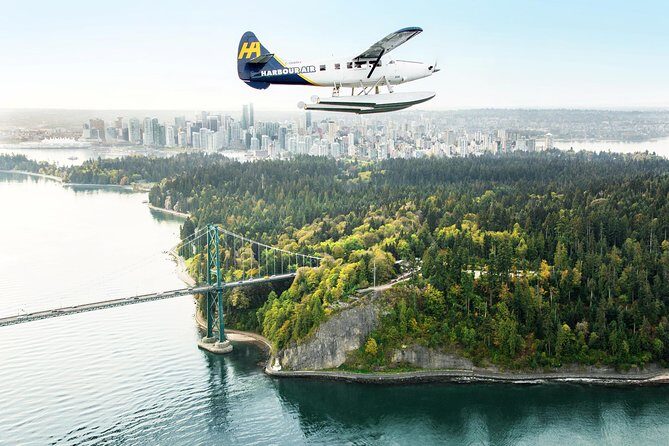
This is where the experience earns its reputation. The flight is short enough that it never feels like a slog, but long enough to give you real “storyboard” views of Vancouver and the islands toward Victoria.
As you lift off, you’ll look down over Burrard Inlet and the downtown waterfront. You’ll get Canada Place and the cruise terminal area from above, plus the Vancouver Convention Centre. From the air, the waterline details are crisp, and you can visually map where neighborhoods sit relative to the harbour.
Then comes the fun part: Stanley Park. You’ll be able to spot key park features like the Totem Poles and Lost Lagoon, along with the way the park spreads between water and city. If you’ve seen Stanley Park from ground level, the aerial angle makes it feel even bigger, more dimensional, and more “how is this still so close to downtown?”
Next, you’ll pass over the North Shore Mountains, which create that dramatic wall of peaks behind the city. Even if you’ve seen photos, the height and perspective from a seaplane changes how those mountains read.
The route also includes a possibility of island sightings—Salt Spring Island, Galiano Island, and Pender Island—which can add variety beyond just city and park views. If visibility is good, these islands look like scattered pieces of coastline geometry.
A quick reality check: seats are on small aircraft, so space can be snug. You’ll be close to other passengers, and you may have limited shoulder room while trying to frame photos. For that reason, I’d keep your camera/phone ready early and don’t wait until the perfect moment—because the perfect moment comes fast.
Seats, ear comfort, and photo strategy (yes, bring a plan)
A few practical notes make a big difference on a short flight like this.
First, expect tighter seating than you’d get on a typical commercial flight. That can affect comfort, especially if you’re tall or you carry bulky personal items. Pack light, and keep your essentials in a bag that fits the available space.
Second, sound is part of the experience. One passenger mentioned that earplugs were available in the seat backs and that not knowing about them led to ringing ears afterward. I’d rather you avoid that gamble. Even if the crew doesn’t highlight it to you in the moment, I’d bring ear protection or ask what’s available at your seat.
For photos, don’t wait for a single “best shot” before you start taking images. The flight gives multiple view types:
- harbour and skyline during departure
- park and water connections mid-flight
- islands and coastline textures as you approach Victoria
Move your lens as the view changes, not as the aircraft bank changes. The seaplane can tilt for sight lines, and you’ll get sharper results if you keep your camera movements steady.
Landing in Victoria: Inner Harbour access beats most arrivals
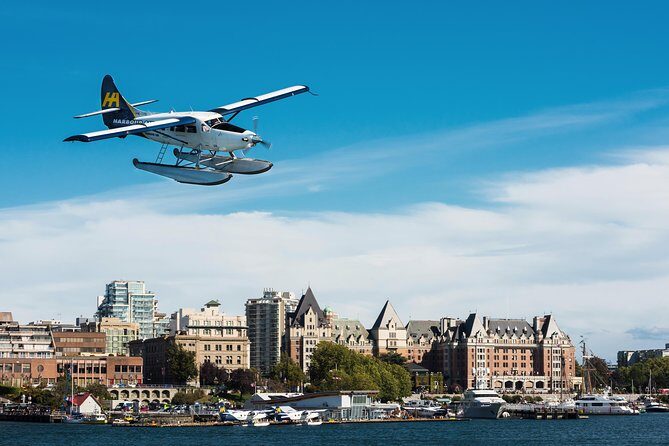
You arrive at Harbour Air – Victoria at 950 Wharf St, at the Victoria Harbour Airport Terminal. This is in the heart of Victoria’s Inner Harbour, steps from major sights and waterfront essentials.
From here, it’s easy to build your day. The terminal sits close to:
- the Parliament Buildings
- the Royal BC Museum
- waterfront cafés and attractions near downtown hotels
One of the underrated benefits of flying in versus ferrying is how quickly you can start walking. When you land directly in the Inner Harbour zone, you can be sightseeing sooner, not just relocating.
Also, the whole water landing is part of the wow-factor. You’re not just traveling by plane; you’re landing on water as part of the experience. That detail matters because it makes the transfer feel like an attraction, not a chore.






Baggage, ID, and the real-world rules you’ll want to follow
This transfer is straightforward, but it does have a few rules that are worth treating seriously so your day stays smooth.
Baggage
You get 25 lbs (11 kg) guaranteed, and that allowance includes all baggage, including purses. If you bring more, excess baggage is handled space available and costs $3 per pound at check-in.
If you’re traveling with a heavier daypack or you tend to overpack for day trips, weigh your bag before you leave. A small correction at home saves money and stress at the terminal.
Identification
Passengers age 18 and up must present either:
- one piece of valid government-issued photo identification, or
- two pieces of government-issued identification without a photograph
This is easy if you travel with a passport or driver’s license. Just don’t plan to improvise at check-in.
No hotel pickup
Hotel pickup isn’t included. That means you’ll want to rely on your own transport or public transit to get to the Vancouver Harbour terminal and later to explore Victoria on your own.
Return trip isn’t included
This is one-way. If you want the ferry alternative or a return flight, you’ll need to book that separately.
Price and value: $292.93 is steep, but it can make sense
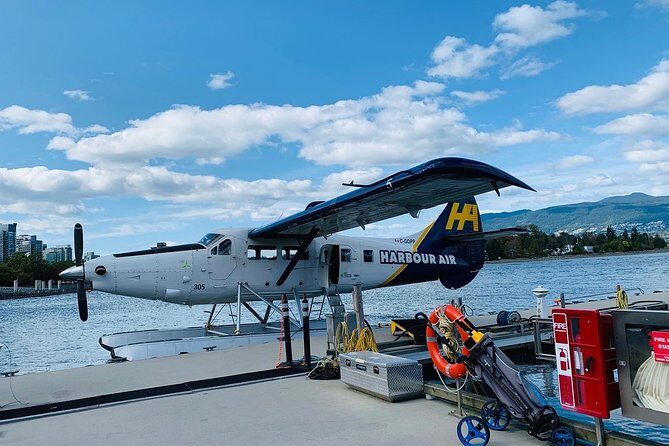
At $292.93 per person, this isn’t a budget move. The best way to judge value is to compare what you’re buying, not just the number.
You’re paying for:
- time saved versus typical ferry-plus-transfer schedules (often more than three hours)
- direct downtown-to-downtown convenience in both cities
- the experience of a seaplane ride and water landing
- a short flight that still delivers multiple “big ticket” sightseeing views from above
If you’re going to spend the day in Victoria either way, the flight can be a smart way to avoid burning half your vacation on transit. If your Victoria plans are flexible, you can turn that saved time into a better meal, longer strolls, or a slower start instead of a checklist sprint.
On the other hand, if you’re fine with the ferry schedule and you’re trying to stretch money, a cheaper ground option will always look better on paper. This transfer is best when your time is expensive.
Weather timing: how to protect your Victoria plans
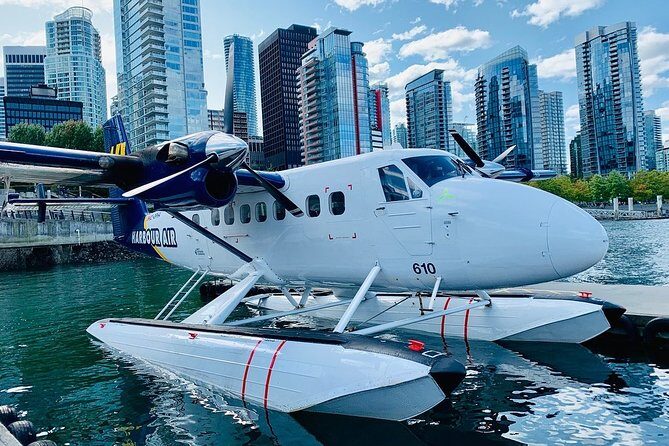
Seaplane flying depends on conditions. The experience requires good weather, and like most small aircraft operations, delays or changes can happen when conditions shift.
From passenger feedback, timing can vary—some flights run like clockwork, while other situations can involve delays or disruptions. That doesn’t mean you shouldn’t book. It means you should protect your itinerary.
The practical approach:
- plan your first Victoria activity as something you can start soon but not something that has to happen at an exact minute
- keep a buffer if you’re connecting onward tours or timed reservations
- don’t build a tight schedule around only this transfer as your single, make-or-break moment
If weather forces a change, the operation may offer a different date or a refund, depending on how your situation is handled at the time. Either way, having backup flexibility makes the day feel less stressful.
Who this one-way seaplane transfer fits best
This is a great match if you:
- want to reach Victoria quickly without sacrificing the experience
- like aerial views and want them without complicated planning
- care about convenience at the start and end of your day (both terminals are in the Inner Harbour zones)
- are traveling with a small group size vibe (max 14 passengers)
It’s also a good fit for first-time seaplane riders. Many people find the takeoff and landing smooth once you’re onboard, and the crew and terminal setup are designed for an easy flow from check-in to boarding.
Who might think twice? If your priority is lowest cost, or if you hate the idea of flying on a small aircraft where space is snug and timing can shift, a ferry might be more your style.
Should you book this one-way seaplane transfer?
If you can afford it and you value time, I think this is one of the smartest ways to do Vancouver to Victoria. The speed is real, the downtown-to-downtown convenience is real, and the view payoff is the kind you remember long after you get off the plane.
Book it if:
- you want to maximize sightseeing hours in Victoria
- you like practical travel that cuts friction
- you’re okay paying for convenience and perspective
Skip it (or price it against alternatives) if:
- you’re on a tight budget
- you’re planning an ultra-scheduled day in Victoria where any delay would wreck the day
If you do book, arrive early, keep baggage within the 25 lbs guaranteed, and plan your first Victoria stop with a little breathing room.
FAQ
How long is the one-way seaplane flight from Vancouver to Victoria?
The flight time is approximately 35 minutes.
Where do I meet for the Vancouver departure, and where do I land in Victoria?
You depart from Harbour Air – Vancouver, 1055 Canada Pl, Vancouver, BC V6C 0C3 and land at Harbour Air – Victoria, 950 Wharf St, Victoria, BC V8W 1T3.
When should I check in for departure?
You must arrive at the terminal at least 40 minutes before the scheduled departure time and be fully checked-in 20 minutes before departure.
What baggage allowance is included?
You’re allowed 25 lbs (11 kg) guaranteed, including all baggage such as purses. Excess baggage is handled on a space-available basis for $3 per lb at check-in.
Is hotel pickup included?
No, hotel pickup is not included.
Is the return trip to Vancouver included?
No. This experience is one way, and the return flight is not included.
What identification do I need for check-in?
For passengers 18 and above, you’ll need either one piece of government-issued photo ID or two pieces of government-issued identification without a photograph.
What happens if weather affects the flight?
This experience requires good weather. If it’s canceled due to poor weather, you’ll be offered a different date or a full refund.
If you want, tell me your travel month and whether you’re planning a same-day Victoria return, and I’ll suggest a smart time buffer and how to pair this with Victoria must-dos.