REVIEW · HOP-ON HOP-OFF TOURS
Big Bus Vancouver Hop-On Hop-Off Sightseeing Tour
Book on Viator →Operated by Big Bus Vancouver / Westcoast Sightseeing · Bookable on Viator
Hop on, pace Vancouver your way. I like the 24- or 48-hour pass flexibility and the chance to see Stanley Park’s totem poles at Brockton Point without buying extra tickets. One thing to watch: in winter the route can tighten up, and the narration quality can vary by driver.
This is an easy way to get orientation fast, especially from the clear-top upper deck. I’d plan your day around the stops that match your mood: shopping on Robson Street, snacks at Granville Island’s Public Market, and classic photo time at Gastown’s Steam Clock.
Buses run about every 20–30 minutes in summer and roughly every 60–70 minutes in winter, so timing matters. You’ll also get audio commentary in multiple languages plus free walking tours via the Audiome Tour app for Stanley Park and downtown Vancouver.
In This Review
- Key highlights worth knowing
- How the Big Bus Vancouver hop-on hop-off works (and how to use it well)
- Starting at Canada Place: your easiest launch point
- Canada Place to Coal Harbour: water views and quick orientation
- Robson Street and the Burrard Street cluster: shopping plus hotel-zone convenience
- Stanley Park Pavilion: totem poles, big views, and the best payoff
- Granville Island at W. 2nd Ave + Anderson: market time you can actually eat
- Theatre and casino-adjacent stops: quick photos and easy breaks
- Homer Street to Gastown Steam Clock: old Vancouver at street level
- Audio commentary: how to get the stories without missing the view
- Stretching the value: passes, Audiome walking tours, and a smart two-day plan
- Price and value: is $48.74 worth it?
- Who this hop-on hop-off tour fits best (and who should consider alternatives)
- Should you book the Big Bus Vancouver tour?
- FAQ
- How long is the Big Bus Vancouver hop-on hop-off tour?
- Do I need a 24-hour or 48-hour pass?
- Where do I redeem my ticket to start?
- Where can I hop on and off during the day?
- How often do the buses run?
- Is audio commentary available in English?
- Are there any walking tours included?
- What if the weather is poor?
- What is the cancellation rule?
Key highlights worth knowing
- 24- and 48-hour consecutive passes let you spread sightseeing across your own schedule
- Stanley Park focus, including the Brockton Point totem poles area
- Clear-top open-deck views make harbor and downtown looks much more enjoyable
- Audio commentary in several languages, with narration quality that can depend on the driver
- Free walking tours in the Audiome Tour app for Stanley Park and downtown
How the Big Bus Vancouver hop-on hop-off works (and how to use it well)

Think of this as a moving sightseeing backbone. You choose where you start in Vancouver and you can hop on and off repeatedly along the route during your pass window. The big win is flexibility: you’re not stuck doing everything in a single straight line.
In real life, the value comes from pairing bus stops with short, targeted outings. Stay on the bus to knock out geography and skyline views, then jump off where you want to linger—like Stanley Park, Granville Island, or Gastown. When you plan this way, the ticket stops feeling like a generic tour and starts feeling like transportation plus context.
One practical move: decide your day’s two anchors before you board. For example, pick Stanley Park and Granville Island. Then use the other stops as mini breaks for photos, coffee, or quick wandering.
You can also read our reviews of more tours and experiences in Vancouver.



Starting at Canada Place: your easiest launch point
Most trips begin with your ticket redemption at the Canada Place Welcome Centre. That puts you right by the cruise terminal/convention zone area, which is a handy starting point for a first look at Vancouver’s waterfront energy.
From here, the route’s logic is simple: it runs along downtown’s waterfront edge and through the busy connectors where you’d naturally want to travel. You’ll see the harbor-influenced skyline quickly, then you can angle into neighborhoods like Robson Street (shopping) or Gastown and Chinatown (older Vancouver vibe).
If you want to maximize your time, start early. Getting on first usually means you can snag a better upper-deck spot, and you’ll also have more buffer if your first stop turn-around runs a little slower in the season.
Canada Place to Coal Harbour: water views and quick orientation
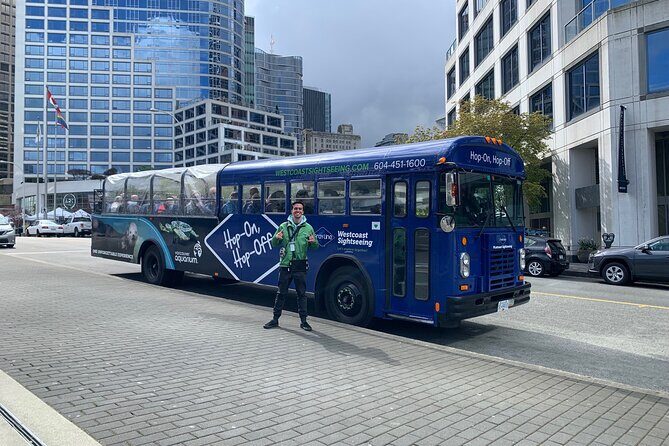
Stop 1 is Canada Place Cruise Terminal / Vancouver Convention Centre / the Westcoast Sightseeing welcome area. This stop is great if you want photos right away and a clean starting point before you branch out.
Stop 2 is Pinnacle Hotel Harbourfront on W. Hastings Street. This is the kind of stop that works well for a short walk and a look back toward downtown, especially if you want that “how the city sits on the water” feeling early.
Stop 3 is Robson Street, near the Blue Horizon Hotel entrance. Even if you don’t plan a full shopping detour, it’s useful because it’s central and walkable to plenty of dining options.
Stop 4 is Coal Harbour in the Harbour Cruises parking lot. Coal Harbour tends to feel more scenic than chaotic, and it’s a good pause point when you want calmer views and a breather from traffic.
If you’re the type who wants to learn the city’s layout fast, staying on the top deck through these early stops is the easiest way to build a mental map.
Robson Street and the Burrard Street cluster: shopping plus hotel-zone convenience
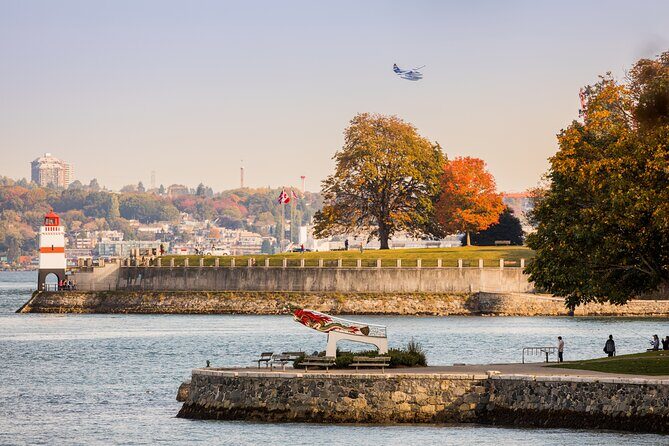
After Robson Street, the route presses through the Burrard Street corridor with stops that are mostly hotel-area anchors.
Stop 5 is Stanley Park Pavilion, across from the public transit loop. This is one of the most important stops on the whole route because it gives you direct access to Stanley Park without needing complicated transit planning.
Stop 6 is Sutton Place Hotel Vancouver on Burrard Street near Smithe Street. Stop 7 is Century Plaza Hotel on Burrard Street across from Sheraton Wall Centre. If you’re staying around here, these stops can save your feet on days when walking feels like too much.
Stops like these also help you do a classic “see it once, return later” strategy. I like using these points to get back to my base area quickly, then rejoining the bus when it’s time to jump to the next highlight.
The main drawback with a city hop-on hop-off route is simple: if the bus is delayed, hotel-zone stops can feel a bit repetitive. That’s why it helps to have a plan for what you’ll actually do at each stop you get off.
Stanley Park Pavilion: totem poles, big views, and the best payoff
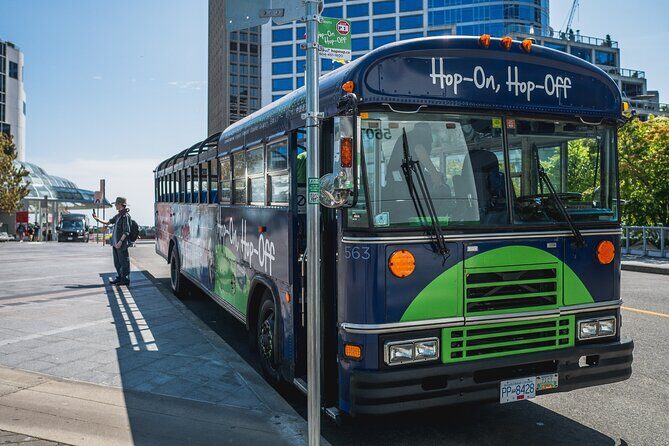
Stop 5 is your doorway into the star of the route. When you get off here, you’re in position to reach Brockton Point, where you can see the carved First Nation totem poles—some of the most visited monuments in British Columbia.
Even if you only do a quick loop, the timing works. You can jump off, take photos, and connect to walking paths at your own pace. If you want to go deeper, you can pair this bus stop with the included Stanley Park walking tour available in the Audiome Tour app.
One more small note that matters: Stanley Park is a place where you’ll want to slow down. So don’t plan this like a drive-by stop. Give yourself enough time to look around and not just sprint from bus to photo to bus.






Granville Island at W. 2nd Ave + Anderson: market time you can actually eat
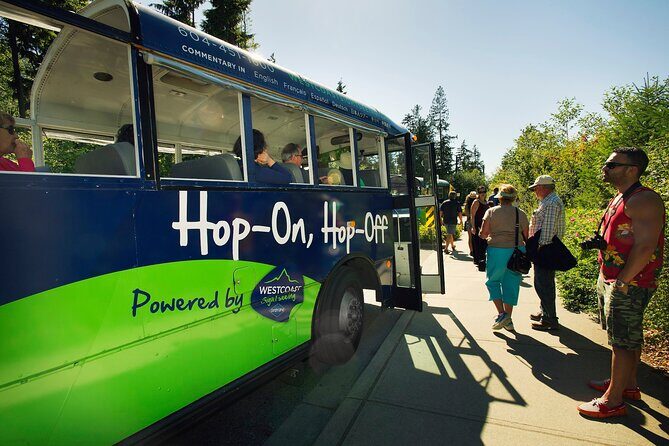
Stop 8 is Granville Island at W. 2nd Ave and Anderson Street. This is one of those “yes, get off” locations because you’re not just sightseeing—you’re in a food-and-creators zone where wandering is the point.
Stop 9 is the Best Western Premier Chateau Granville Hotel & Suites & Conference Centre at the corner of Granville Street and Helmcken Street. Stop 10 is Sandman Signature Vancouver Downtown Hotel at W. Georgia Street Hotel entrance. These stops help you access the downtown dining/entertainment stretch and keep your route from feeling like only waterfront and parks.
Stop 8 is the one with the clearest payoff: Granville Island’s Public Market is where you can grab a bite without pre-booking. If you’re traveling with picky eaters or just want options, this stop is a practical win.
If you’re trying to do too much, watch the timing. Granville Island can turn into a long stop if you’re hungry or if you like browsing. Build in extra time so you don’t feel rushed back onto the bus.
Theatre and casino-adjacent stops: quick photos and easy breaks
Stops 9 and 10 lead you toward the energy near the entertainment and sports/city-event areas. Even if you don’t go inside anywhere, these stops are useful for city views and for refueling on a sightseeing-heavy day.
Stop 11 is Homer Street at the Library Square NW corner of Robson Street + Homer Street. This is a good spot if you want something calmer than the busiest blocks but still central enough to keep walking easy.
Stop 12 is Parq Casino on Pacific Blvd across from BC Place by the pedestrian overpass. This area can be a nice checkpoint because it’s so connected to major downtown landmarks. It’s also a solid spot to get oriented if your next move is toward Gastown and Chinatown.
The drawback here is that you may not feel an urge to linger. If you prefer “get off, do an activity, get back on,” these stops work best as transit breaks unless you’re specifically interested in the BC Place/Parq zone.
Homer Street to Gastown Steam Clock: old Vancouver at street level

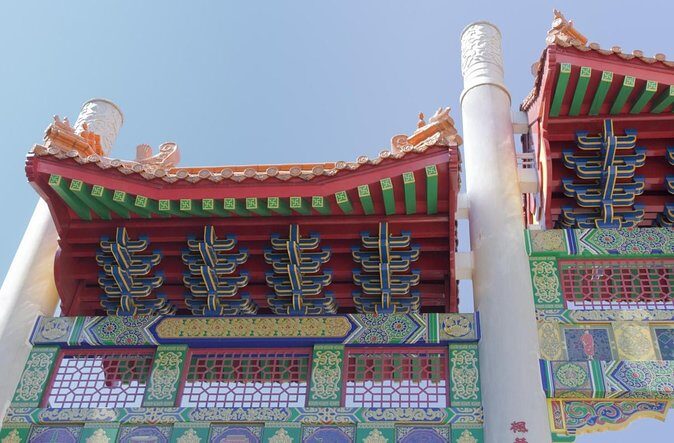
Stop 13 is Chinatown at Keefer Street across from Easy Park. If you want a neighborhood change of pace, this is your moment. Chinatown is one of the best places to step off the bus and actually walk a few blocks at street level.
Stop 14 is Gastown Steam Clock in front of Trees Organics Coffee. This is the iconic photo stop. Plan for it to be busy, because it’s the kind of landmark people build their whole afternoon around.
What I like about this end-of-route stretch is that it contrasts with the park-and-water sections. You get older streets, more small shops, and a different kind of Vancouver energy.
If your day is tight, don’t try to do Chinatown and Gastown as a marathon. Pick one area to explore longer and treat the other as a short walk-plus-photos moment.
Audio commentary: how to get the stories without missing the view
The tour includes onboard audio commentary, and recorded narration is available in English, Spanish, French, German, Japanese, Chinese, and Korean. That’s a big deal if you’re traveling with someone who doesn’t want to rely on a phone translator.
The big difference you’ll feel is whether your narration is delivered live by the driver or played as recorded audio. I’ve seen lots of praise for Sherry, who people described as funny, engaging, and full of witty city trivia. In contrast, some people reported rides where narration didn’t feel as present.
Here’s a practical way to protect your experience: if you’re hopping off at a stop, snap a photo of the bus’s expected return time. Also, use the Big Bus app for directional help, especially if you’re dealing with smaller signage at certain stops like Stanley Park.
One more thing to keep in mind: audio can lag behind where you are at street level. If you want the best results, don’t plan to pause exactly at a narration cue. Use narration for context, then look around with your own eyes once you’re off.
Stretching the value: passes, Audiome walking tours, and a smart two-day plan
You can choose a ticket valid for 24 or 48 consecutive hours. The key detail is consecutive hours, not split days. So if you buy a 48-hour pass, treat it like a two-day sightseeing window and plan your stops around that timing.
What makes this tour feel better than a one-time bus loop is what’s included beyond the bus ride. You get free exclusive walking tours of Stanley Park and downtown Vancouver through the Audiome Tour app. This is a good pairing: the bus gives you the broad picture, and the walking tours help you slow down where it matters.
There’s also a 2-hour Twilight Tour included with selected products. If you see an option that bundles it, it can be a smart add-on because Vancouver at dusk changes the vibe fast.
My favorite use pattern is simple:
- Day 1: do Stanley Park plus Granville Island, then end near Gastown/Chinatown for atmosphere.
- Day 2: use hotel-zone and central stops to revisit anything you rushed on Day 1.
Price and value: is $48.74 worth it?
At $48.74 per person, this isn’t a bargain ticket. It’s priced like a flexible, multi-stop orientation tool in a city where time matters.
To decide if it’s worth it for you, look at how much you value not planning routes. If you’re juggling short days, jet lag, or you don’t want to think hard about transit connections, the pass can pay off quickly. You’re buying a low-stress way to sample the city: waterfront, parks, neighborhoods, shopping corridors, and market time.
If you already have your itinerary locked and you love walking everywhere, you might feel the price more. But if you want a “get your bearings fast” experience with real stops you can use, this price can make sense—especially with the included Audiome walking tours.
Also, buses run more frequently in summer (every 20–30 minutes). That frequency is part of the value. In winter, spacing increases, so build more buffer into your schedule.
Who this hop-on hop-off tour fits best (and who should consider alternatives)
This tour fits best if you want:
- A first-time overview of Vancouver without a heavy planning load
- A practical way to reach both Stanley Park and downtown neighborhoods
- An audio-rich experience you can do at your own pace
It’s also a reasonable choice if you like combining transportation with short walks. The stops are placed where you can branch out to shops, markets, and city landmarks without complicated logistics.
If you hate waiting for buses, you’ll want to plan around seasonal frequency. And if you strongly prefer live, on-the-spot narration, aim for a driver known for storytelling—Sherry is the name that shows up again and again in praise.
Should you book the Big Bus Vancouver tour?
If you want a flexible, stop-by-stop way to see Vancouver’s biggest hits—Stanley Park, Granville Island, Gastown, and Chinatown—this is a solid booking. The pass options help, and the included Audiome walking tours are a real bonus that turns the ticket into more than just a bus ride.
I’d book it if you’re on a time crunch and you want your day to feel organized without feeling rigid. Skip it only if you’re the kind of traveler who doesn’t want to wait at stops and you’d rather walk a route start to finish with no bus narration in the middle.
FAQ
How long is the Big Bus Vancouver hop-on hop-off tour?
The duration is about 1 hour 30 minutes, approximately.
Do I need a 24-hour or 48-hour pass?
You can choose a pass valid for 24 or 48 consecutive hours. Ticket validation cannot be split over days.
Where do I redeem my ticket to start?
The ticket redemption point is the Canada Place Welcome Centre, Vancouver, BC V6C 3B5, Canada.
Where can I hop on and off during the day?
You can hop on and off at key stops around downtown Vancouver, including areas like Stanley Park, Robson Street, Granville Island, Chinatown, and Gastown Steam Clock.
How often do the buses run?
Stop frequency depends on the season. In summer, buses run about every 20 to 30 minutes. In winter, it’s about every 60 to 70 minutes (subject to change).
Is audio commentary available in English?
Yes. Recorded commentary is available in English, plus other languages including Spanish, French, German, Japanese, Chinese, and Korean.
Are there any walking tours included?
Yes. You get free exclusive walking tours of Stanley Park and downtown Vancouver through the Audiome Tour app.
What if the weather is poor?
The experience requires good weather. If it’s canceled due to poor weather, you’ll be offered a different date or a full refund.
What is the cancellation rule?
You can cancel for free up to 24 hours in advance for a full refund. Canceling less than 24 hours before the start time is not refundable.