REVIEW · PRIVATE DRIVERS
Vancouver to Seattle Scenic Seaplane Transfer: One Way
Book on Viator →Operated by Harbour Air Ltd · Bookable on Viator
Skip the big-airport routine and fly over water. I especially like the downtown feel of starting at Coal Harbour and the practical 25 lb luggage allowance per person, so you lose less vacation time to transit and airport hassle.
The main thing to consider is that this is an international trip with US entry checks. You’ll need a valid passport, and if you’re denied entry into the US, you’re responsible for the return flight costs.
In This Review
- Key things that make this seaplane transfer worth your time
- Vancouver to Seattle, minus the airport drag
- Price and value: what you’re really buying
- Luggage rules you should know before you pack
- Check-in timing and the passport/customs flow
- The flight plan in plain English: what happens from takeoff to landing
- Over Vancouver: North Shore, Stanley Park, Lions Gate, and English Bay
- Crossing the Salish Sea: border in the air, islands below
- Arrival in Seattle: landing at Lake Union near downtown
- Turning arrival into a real Seattle day
- Why the small-group seaplane experience feels easier
- Who should book this seaplane transfer?
- Should you book the Vancouver to Seattle seaplane?
- FAQ
- What is the flight duration for the Vancouver to Seattle seaplane transfer?
- Where does the seaplane depart from in Vancouver?
- Where does the seaplane land in Seattle?
- How much luggage is included in the price?
- Do I need a passport for this one-way flight?
- Is there customs inspection on this route?
- What happens if I am denied entry into the United States?
- When should I arrive at the terminal before departure?
- Is the ticket mobile?
- How many people are on the seaplane?
Key things that make this seaplane transfer worth your time
- Coal Harbour terminal location: steps from Canada Place and the Vancouver Convention Centre
- A short flight time: about 55 minutes in the air
- 25 lb (11 kg) confirmed luggage included: covers personal items, not just a carry-on
- Small aircraft experience: maximum of 12 travelers for a quieter ride
- Iconic views from low altitude: Vancouver, North Shore, Stanley Park, Lions Gate, English Bay, and more
- Lake Union arrival near downtown: land right where Seattle sightseeing starts fast
Vancouver to Seattle, minus the airport drag
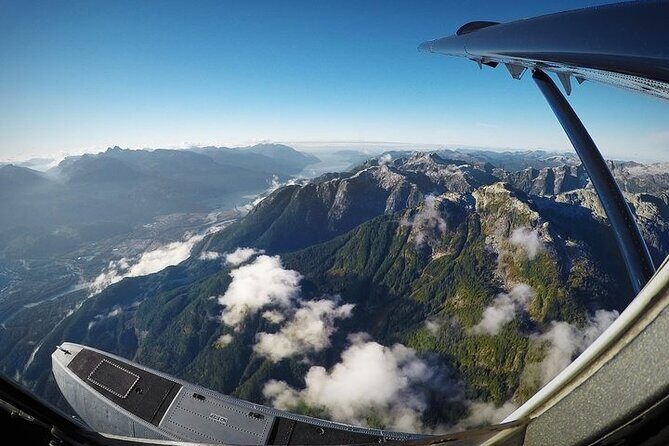
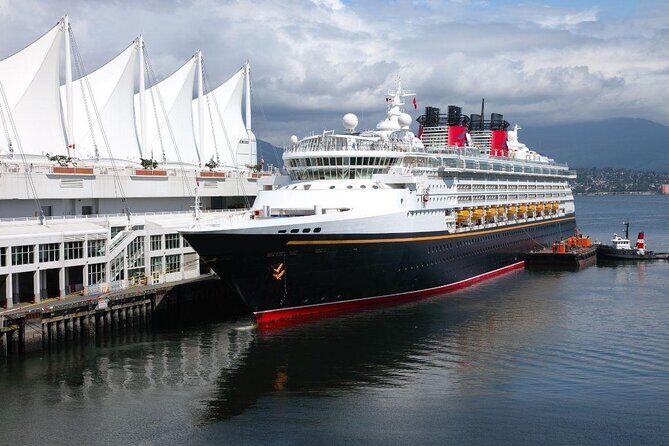
This is the kind of transfer that changes the whole tone of a trip. Instead of parking, shuttles, long walks, and terminal waiting, you roll into a seaplane operation in the middle of the city. The starting point is Coal Harbour Seaplane Terminal in downtown Vancouver, very close to Canada Place and the Vancouver Convention Centre, so you can stay in “vacation mode” from the first minute.
Then comes the most fun part: you take off from the water, fly over coastlines and islands, and land on the other side near Seattle’s downtown. That water-to-water angle makes the flight feel personal, like you’re watching the Pacific Northwest from the world’s best seat—without the mass-market chaos.
You can also read our reviews of more tours and experiences in Vancouver



Price and value: what you’re really buying
At $331.46 per person one-way for a ride that’s about 55 minutes, it’s not the cheapest way to get from Vancouver to Seattle. But it often ends up being good value when you factor in time. Even if you’d normally budget hours for getting to a big airport, waiting, boarding, and then transferring into Seattle, a seaplane can compress a chunk of travel into something closer to an afternoon interlude.
There’s also a practical money-saver built into the fare: 25 lb (11 kg) confirmed luggage per passenger that includes personal items. That matters because international travel can get stingy fast with baggage fees. Here, the allowance is clearly included, and your luggage is confirmed to travel with you.
If you’re someone who’s trying to keep travel friction low—especially when you’re connecting from other parts of a trip—this can be worth paying for. The trade-off is that it’s still an international border trip, so you can’t treat it like a casual hop.
Luggage rules you should know before you pack
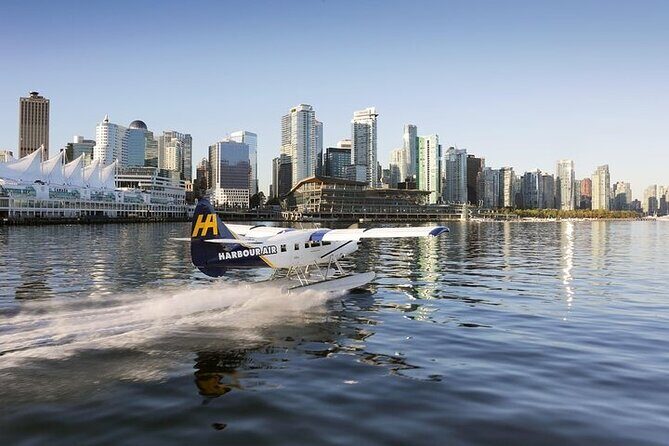
This route includes 25 lb (11 kg) confirmed luggage per passenger. The important detail is that this allowance is tied to the passenger for the international itinerary. The info is explicit: all baggage must travel with you on your international scheduled flight, and excess baggage can’t be swapped into an earlier or later departure.
If you expect to be over the limit—common if you’ve been on a cruise or you just pack like you’re moving in—there is an option to purchase an extra seat to accommodate additional baggage weight. The key is that this has to be requested in advance; you can’t assume it’ll be solved at the terminal on check-in day.
My practical advice: weigh your bag at home and keep it under the limit. If you’re uncertain, plan conservatively. A few pounds can matter more on a fixed allowance than they do with checked bags on some other carriers.
Check-in timing and the passport/customs flow
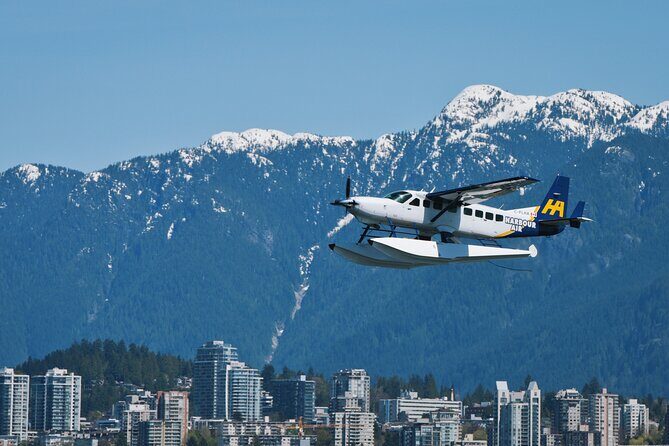
Plan your day around one simple idea: this is not a “show up whenever” experience. You must arrive at the terminal at least 60 minutes before the scheduled departure time. Check-in also happens 1 hour prior to departure, which gives you a buffer to handle passport presentation and baggage procedures without rushing.
You’ll need a valid passport. Before you get to the views and the water takeoff, there will be customs inspection at departure from Vancouver, including baggage checks. Then you’re flying with US entry requirements in mind: you must comply with what the US requires before departure.
One important consideration: Harbour Air is not liable for expenses or inconveniences if you’re denied or delayed entry. If denied entry into the US occurs, you’re responsible for the return flight costs. That’s the kind of rule you should respect when you’re planning a tight itinerary—especially if your passport situation isn’t fully sorted.
The flight plan in plain English: what happens from takeoff to landing
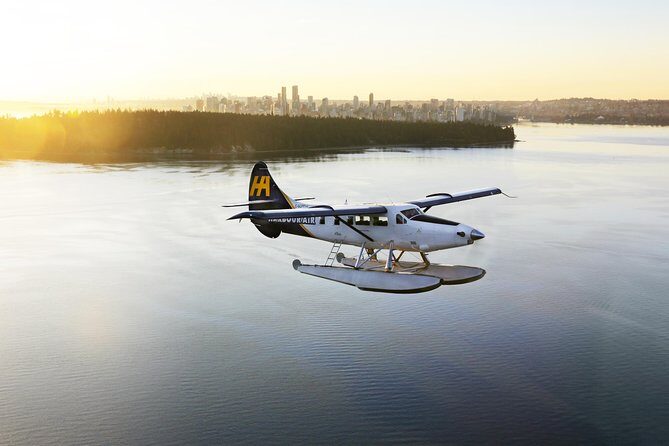
This is a point-to-point transfer with an onboard safety briefing from your pilot before takeoff. After that, it’s all about the route over the Pacific Northwest, crossing the border in the air, and then landing on Seattle’s lake.
You’re typically flying in a small group—maximum 12 travelers—so it feels less like a cattle-call and more like a private viewing platform. The small-plane factor matters for comfort and attention, and it also affects how fast you can move through steps at both ends.






Over Vancouver: North Shore, Stanley Park, Lions Gate, and English Bay
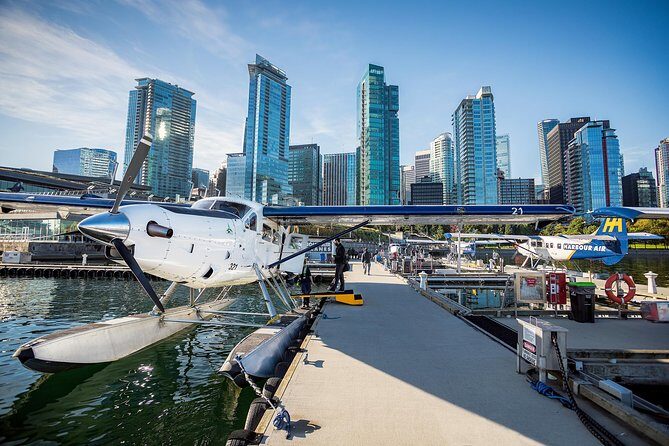
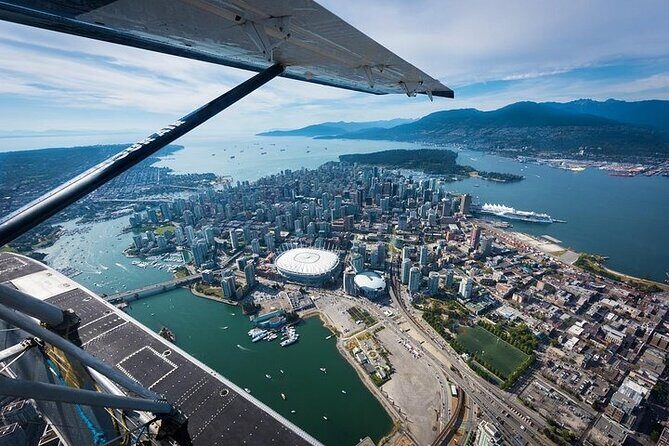
Once you leave Coal Harbour, Vancouver is right there under you. The takeoff area gives way to a classic postcard mix: the North Shore Mountains rising above the city, with views toward Stanley Park, the Lions Gate Bridge, and the shimmering English Bay waters.
What makes this stop special is how low and close the city looks from the air. Big cities usually feel distant once you’re on the ground. From above, you see how the coast and the mountains are woven together, and it’s easy to get a “wow” moment without standing in a crowded viewpoint line.
Practical tip: if you’re aiming for photos, bring your phone with the camera ready and keep a clean lens. The flight is short, and you’ll want quick shots of bridges, green patches, and coastline curves as the plane banks.
Crossing the Salish Sea: border in the air, islands below
As you head south, the route takes you over the Salish Sea and across the international border into the United States. The scenery here leans more toward water and forested shores than big-city landmarks.
You’ll have the chance to see things like the San Juan Islands—small islands and stretches of water that look calm from the air, but feel huge once you’re flying over them. Even on a short flight, this part is often where the trip starts to feel like more than transportation.
If you like geography, this is a good “moving map” moment: you can watch how coastlines and island clusters shape travel routes in this part of the world.
Arrival in Seattle: landing at Lake Union near downtown
Instead of landing far outside the city, you land at Lake Union. The Seattle seaplane base is at 950 Westlake Ave N, on the south end of the lake close to the downtown core, near the Museum of History and Industry (MOHAI).
Lake Union has a very Seattle feel. From the water, you’re positioned to take in the city skyline and familiar landmarks like the Space Needle and Gas Works Park. And because it’s close to downtown, you don’t need an extra commute just to start exploring.
What I love about this kind of arrival is the immediate shift from travel mode to walking-around mode. You touch down in the middle of the action, and that makes it easier to plan a partial-day itinerary the same day you arrive.
Turning arrival into a real Seattle day
Once you land, Seattle is yours to explore. Here’s how I’d think about it so you don’t end up with an all-day blur:
- Start with something central and easy to reach from downtown.
- Then choose one “signature Seattle” stop and one “nature break” option, depending on your energy.
A few good anchors if you want options that match different travel styles:
- Pike Place Market for food, local goods, and that iconic Seattle buzz
- Seattle Art Museum if you want a culture break with a comfortable indoor option
- Chihuly Garden and Glass if you want a memorable art-and-glass stop
- Mount Rainier National Park as a day trip idea if your schedule allows
If you need to connect onward to Sea-Tac Airport, you might find it helpful to plan around roughly 24 minutes by Uber, based on one detailed account connected to this route. It’s a practical time estimate to help you map your day, but always leave extra cushion for real-world traffic.
Why the small-group seaplane experience feels easier
A maximum of 12 travelers means the whole transfer feels calmer. Check-in is still check-in, but it doesn’t have the same mass-line vibe you get with big airports.
This matters because it changes how you experience border procedures. On smaller flights, the customs/border process can be quick since fewer people are moving through at once. One account described border patrol as a short, step-by-step flow that happens close to the plane, with a nine-passenger aircraft. That’s not guaranteed every time, but the overall advantage of a small group is real.
Also, the flight itself tends to feel more relaxed than long-haul air travel. Reports often highlight how safe and manageable it feels in a small plane, and how gentle a water landing can be compared with the idea of a runway touchdown.
Who should book this seaplane transfer?
I’d point this transfer toward travelers who value time and convenience over price-only decisions.
It’s especially suitable if:
- You want to start Seattle sightseeing fast after arrival
- You’d rather avoid airport lines and long transfers
- You have moderate luggage and want a clear baggage allowance
- You like views—bridges, mountain silhouettes, islands, and coastline patterns
It may be less ideal if:
- You’re extremely cost-sensitive and would rather spend fewer dollars, even if it takes longer
- You can’t manage passport/entry requirements carefully
- You’re likely to exceed the luggage limit unless you plan the extra-seat option in advance
If you’re pairing this with other legs of a trip, it’s also a nice “connector” when your schedule needs to be tight but you don’t want the stress.
Should you book the Vancouver to Seattle seaplane?
If you want a transfer that’s both practical and genuinely fun, I think this is an easy yes. The biggest reasons to book are the downtown departure and downtown-near arrival, the included 25 lb luggage, and the short 55-minute flight time.
The only strong reason to hesitate is the international side. Make sure your passport is valid, your US entry situation is solid, and you understand you’re responsible for costs if you’re denied entry. If you’re confident on that front and you want to trade “airport time” for “views time,” this seaplane transfer is one of the better value choices in its category.
FAQ
What is the flight duration for the Vancouver to Seattle seaplane transfer?
The flight time is listed as approximately 55 minutes.
Where does the seaplane depart from in Vancouver?
It departs from Harbour Air – Vancouver at 1055 Canada Place, Vancouver, BC V6C 0C3, Canada (Coal Harbour Seaplane Terminal).
Where does the seaplane land in Seattle?
It lands at 950 Westlake Ave N, Seattle, WA 98109, USA on Lake Union.
How much luggage is included in the price?
The fare includes 25 lb (11 kg) confirmed luggage per passenger, including personal items.
Do I need a passport for this one-way flight?
Yes. A valid passport is required for travel.
Is there customs inspection on this route?
Yes. At departure from Vancouver, there will be customs inspection, including baggage checks, and passengers must comply with US entry requirements before departure.
What happens if I am denied entry into the United States?
If you are denied entry, passengers are responsible for return flight costs. Harbour Air is not liable for expenses or inconveniences arising from denied or delayed entry.
When should I arrive at the terminal before departure?
You must arrive at least 60 minutes before the scheduled departure time.
Is the ticket mobile?
Yes, the experience includes a mobile ticket.
How many people are on the seaplane?
The experience has a maximum of 12 travelers.