REVIEW · AUDIO TOURS
Explore Vancouver: Beaches & Downtown Audio Tour Bundle
Book on Viator →Operated by Adventures with Action · Bookable on Viator
Soundtrack your Vancouver drive. This self-guided audio route strings together beaches, bridges, and downtown landmarks with location-triggered stories that keep your eyes on what matters outside the car. You get an easy flow from calm sand at Sunset Beach to big-city sights like Gastown’s steam clock and Stanley Park’s totem poles.
What I like most is the value: it’s $14.99 per group (up to 4), and you buy per car, not per person. I also like the way the tour helps you move at your own pace, since you can start anytime, pause anywhere, and stop for snacks and photos without feeling rushed.
One consideration: this is more story-forward than beach-only. The route includes plenty of scenic stops, but you’ll often be doing quick look-and-learn moments rather than long beach hangs at every shoreline.
In This Review
- Key highlights worth planning for
- How a beach-to-downtown route keeps Vancouver easy
- Price and value: $14.99 per group can work out fast
- The app experience: offline audio that plays when you arrive
- Stop 1: Sunset Beach for an easy warm-up
- Stop 2: Burrard Street Bridge and the secret stairwell story
- Kitsilano Beach Park and the pool you’ll want to see
- Jericho Beach Park: calm beach time plus a logging-name lesson
- Locarno Park: quiet by law means a different vibe
- Spanish Banks: spacious shoreline with student energy nearby
- UBC: a campus story that ties to Vancouver’s wider past
- Nitobe Memorial Garden: Japanese garden authenticity you can’t fake
- UBC Botanical Garden finish: Treewalk and plant research time
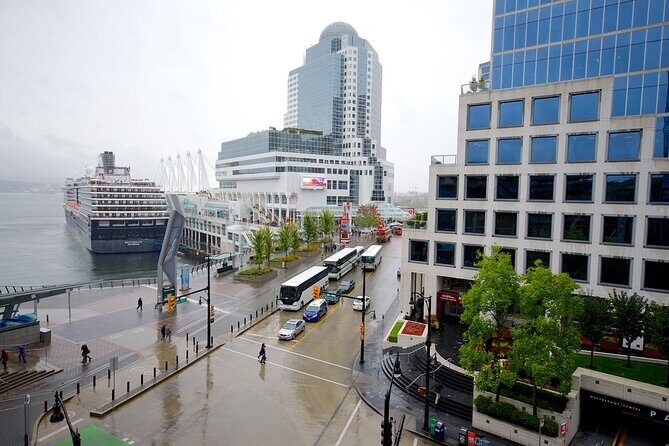
- Downtown anchor: Gastown Steam Clock and Robson Square
- Stanley Park: totem poles plus a cannon that still fires
- Prospect Point Lookout: sweeping views and a Squamish legend
- Who should book this bundle (and who might want a different plan)
- Should you book the Vancouver Beaches & Downtown Audio Tour Bundle?
- FAQ
- FAQ
- How much does the Vancouver Beaches and Downtown audio tour cost?
- How long does the tour take?
- Is the tour offered in English?
- Does it work offline without cellular or Wi-Fi?
- Do I need to buy attraction tickets for the stops?
- Does the tour have an expiry date?
- What hours is the activity available?
- Can I cancel for a full refund?
Key highlights worth planning for
- Per-car pricing for up to 4 people makes the bundle feel good even for small groups.
- Offline maps + location-triggered audio means you’re not stuck hunting signals for each stop.
- 19+ audio stories across about 9 miles gives you a lot of context per drive.
- Kitsilano Beach Park’s 137-meter heated saltwater pool is a standout practical sightseeing target.
- Stanley Park + the Nine O’Clock Gun bring evening energy if you time your stop for 9:00 PM.
- UBC gardens with real-world authenticity add a calmer counterpoint to busy downtown.
How a beach-to-downtown route keeps Vancouver easy
This bundle is built for one of Vancouver’s best moves: doing a short drive that links water views with iconic sights. You’re not stuck choosing between neighborhoods. Instead, you string together beach viewpoints, campus walking time, and downtown anchors in a single outing.
Plan for about 2 to 3 hours overall. The audio route itself is described as around 9 miles with 19+ stories, roughly 1 to 2 hours to complete if you keep moving. In real life, you’ll likely stretch it with parking, restroom breaks, and the kind of photo stops Vancouver is famous for.
The other big plus is the setup is designed to reduce friction. You’re not waiting for a guide at every corner. The audio starts when you’re at the first story point, then cues you along the route based on where you are.
You can also read our reviews of more tours and experiences in Vancouver

Price and value: $14.99 per group can work out fast
At $14.99 per group for up to 4 people, the math is friendly if you’re traveling with family or friends. This becomes even better when you compare it to per-person guided tours, where costs can climb quickly with a small group.
You’ll feel the value most if you actually use the flexibility. The bundle includes lifetime access with no expiry, so if you come back to Vancouver later, you can use it again. And because it’s self-guided, you can match it to your day instead of forcing your day to match a schedule.
A final value angle: the tour covers a lot of ground in a single pass. You get beaches in the west side direction plus downtown landmarks like Gastown, Robson Square, and Stanley Park without needing to stitch together multiple activities.
The app experience: offline audio that plays when you arrive
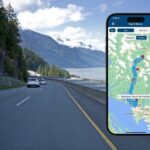
This tour runs through Action’s Tour Guide App (download required). After booking, you’ll receive email and text instructions plus a password. The key practical point is that you must download the tour while you have strong Wi‑Fi or cellular, then it works offline after that.
Once you’re onsite, you open the app and start the version that matches your planned starting point and direction (useful if multiple variants exist). From there, audio is hands-free: stories play automatically as you move through the route.
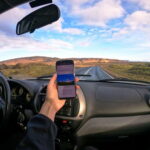
If you’re driving, you can connect your phone to your car stereo using Bluetooth, USB, or AUX. If you prefer walking sections with cleaner sound, headphones can help. The tour is also compatible with Apple CarPlay, and Android Auto support is described as on the way.
This offline approach matters in Vancouver because your day can include beaches, parks, and areas where signal can be unreliable. You’re not forced into constant reloading or map-checking.
Stop 1: Sunset Beach for an easy warm-up
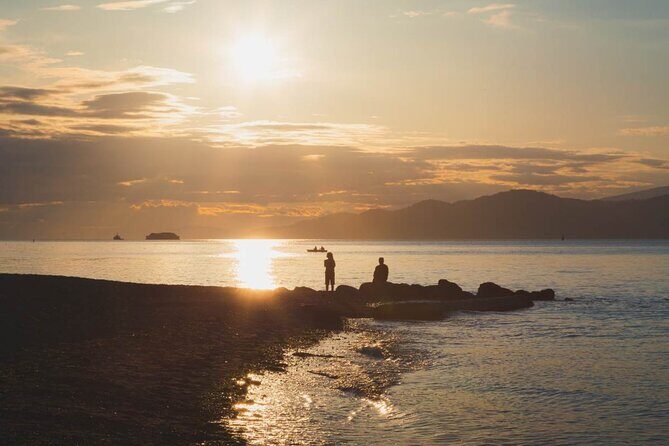
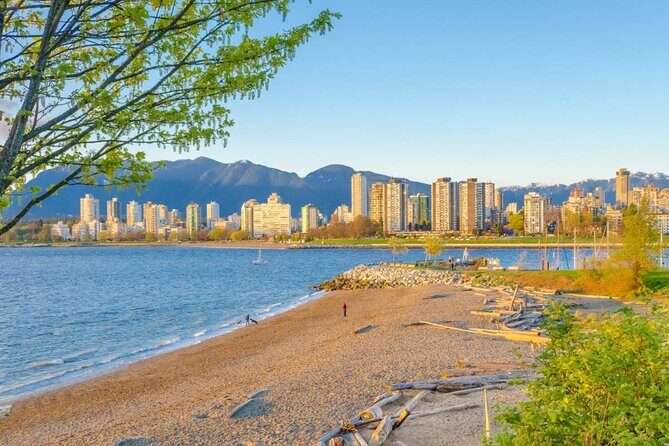
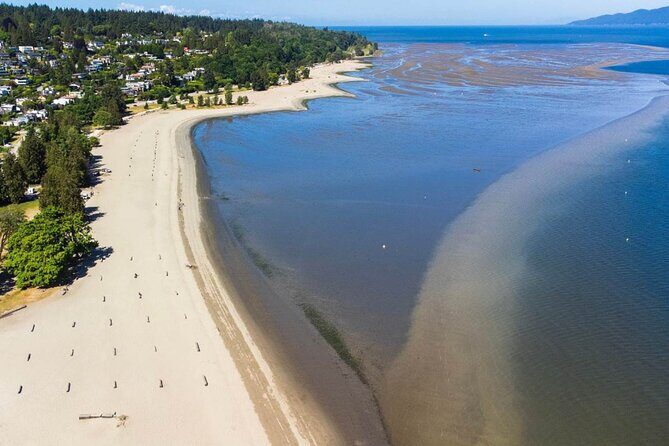
Your first story lands at Sunset Beach, a sheltered strip of sand with calm water. It’s the kind of beach where you can keep things simple: walk the shoreline, grab a snack from concessions, and if you’re traveling with kids or just want an easy moment, you’ll appreciate that there’s also a grassy field for downtime.
Why this stop works well early: it sets a low-stress tone. You’re not yet dealing with downtown traffic logic or parking puzzles. And if you time your outing near evening, the name alone gives you a reason to slow down and look at the water.
Possible drawback: you might want to linger longer than the audio time allows. If your beach plan is long and lazy, treat Sunset Beach as a place to add 20–30 minutes beyond the story beat.
Stop 2: Burrard Street Bridge and the secret stairwell story
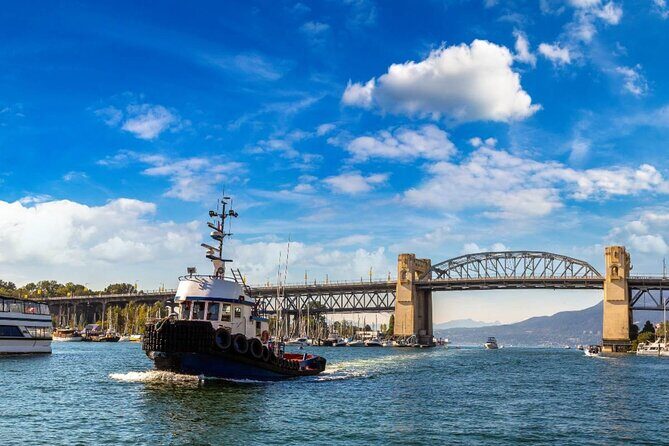
Next comes the Burrard Street Bridge. You’ll hear it described as the oldest bridge in Vancouver, and the story leans into the idea that the exterior hides surprises.
One detail that’s genuinely fun: inside the south tower there’s an entire stairwell that once connected the bridge to Vanier Park. It was sealed off nearly 100 years ago, and the explanation is still unknown. That’s the kind of local mystery that makes you look harder at a structure you’d otherwise just pass.
Practical tip: have your phone volume set before you arrive at the bridge view point. This is a short listen, and it’s easier to catch the details without fiddling while parked.
You can also read our reviews of more tours and experiences in Vancouver

Kitsilano Beach Park and the pool you’ll want to see
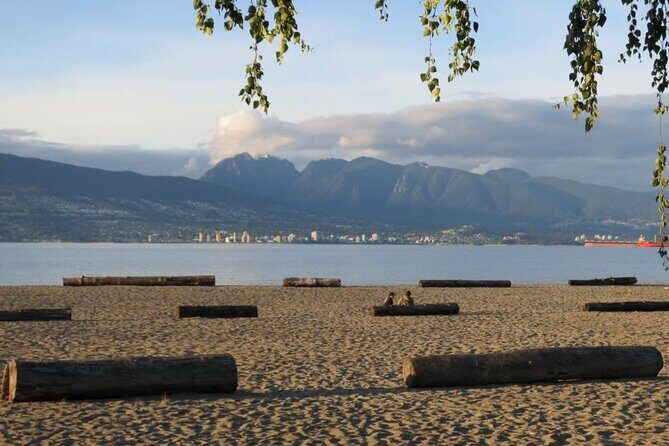
Kitsilano is next, with Kitsilano Beach Park close by. This is where you get classic Vancouver views—beach lines opening toward English Bay.
If you have even a little interest in landmarks you can confirm with your eyes, this is worth it. The tour points out the heated outdoor pool at Kitsilano Beach Park. It’s saltwater, 137 meters long, and open seasonally from May to September. Even if you don’t swim, it’s a great “only-in-Vancouver” sight.
What I like here is the mix: neighborhood context plus a specific physical feature. Instead of vague sightseeing, you know exactly what to look for.
Jericho Beach Park: calm beach time plus a logging-name lesson
Jericho Beach Park follows. The story behind the name is simple but satisfying: Jericho derives its name from Jeremiah Rogers, a 19th-century logger who worked in the area.
That kind of detail can make a beach stop feel more anchored. You’re not only looking at water—you’re learning why the place ended up with the name it has today.
If you’re trying to keep the day moving smoothly, Jericho works as a steady, not-too-chaotic stop. It’s a good place to stretch your legs without turning the outing into a full beach day.
Locarno Park: quiet by law means a different vibe
Then you roll up to Locarno Beach at Locarno Park. Here’s one specific clue the audio gives you that changes your expectations: amplified sound isn’t permitted. That means this beach can feel noticeably quieter than other shoreline spots where music drifts over the sand.
I’d use that info to plan your mood. If you’re craving peaceful breaks—coffee in hand, kids running without noise overload—this stop fits. If your group wants a party atmosphere, you’ll likely find the vibe more subdued than you expected.
Spanish Banks: spacious shoreline with student energy nearby
Spanish Banks Beach Park is one of the more open, expansive shoreline stretches on the route. The sandy banks stretch about a mile along the far western edge of Vancouver, and because it’s close to the University of British Columbia, it draws a mix of students and outdoor types.
The tour frames it as a practical break from books (for students) and as a spot with good waves for adventurous visitors. Even if you don’t surf, you’ll get the feeling of wide-open space more than “tight beach corner.”
This is also where you’ll likely want a quick photo stop from a place that gives you the full shoreline line, since the area is about width and stretch.
UBC: a campus story that ties to Vancouver’s wider past
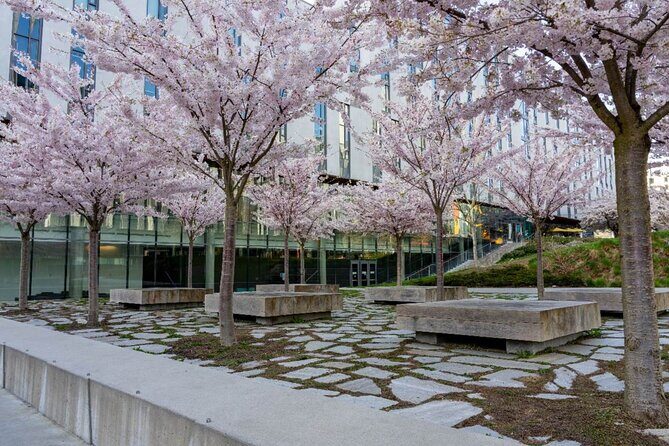
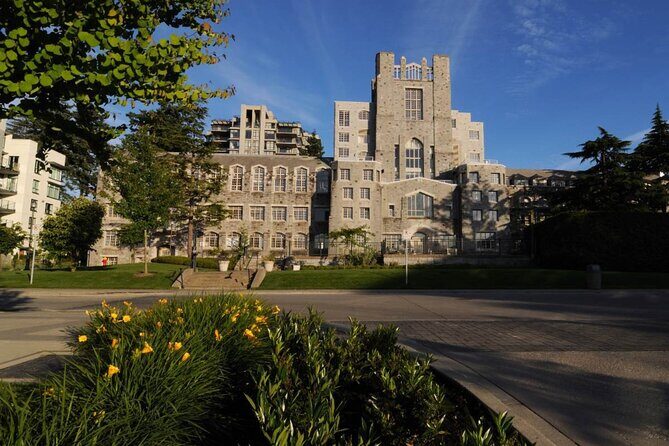
Now you reach the University of British Columbia, and the audio slows things down with context. You’ll hear that the university’s story mirrors the city’s broader story, especially around the relationship between the university and First Nations people.
Even if you’re not planning a deep campus walkthrough, this part can change how you see the surrounding area. It gives you a lens before you start looking at gardens, buildings, and the quiet spaces between them.
Nitobe Memorial Garden: Japanese garden authenticity you can’t fake
Next is Nitobe Memorial Garden, a traditional Japanese garden. The audio description makes a specific claim about authenticity: when Japan’s 125th emperor, Akihito, strolled through the garden in 2009, he reportedly said he felt like he was in Japan.
That detail is helpful because it tells you what kind of place you’re entering. This isn’t just “a decorative garden.” It’s presented as a carefully authentic experience, so give it the time to breathe.
Practical note: if you’re visiting outside peak season or when the weather is changeable, gardens are often the calmer option compared to shoreline stops. You’ll probably appreciate that shift in rhythm.
UBC Botanical Garden finish: Treewalk and plant research time
The route wraps up at the UBC Botanical Garden & Centre for Plant Research. If you want a signature activity here, the audio points you toward the Treewalk, described as famous, plus the option to simply stroll the garden grounds.
Why the finish works: it’s an easy “choose your pace” ending. If your group is energetic, Treewalk can be the anchor. If you’re tired after beach and downtown sights, a slow walk through garden paths gives your legs a reset.
This is also a good moment to decide whether you’re done for the day or whether you want to keep exploring around UBC on your own.
Downtown anchor: Gastown Steam Clock and Robson Square
After UBC, the route shifts back toward downtown. First up is Gastown’s Steam Clock.
The audio gives you two details that make it more than a cute photo spot: it has steam-powered whistles, and it’s wound using steam to drive the small engine. It’s also described as one of only seven working steam clocks in the world. That rarity helps you understand why people photograph it even after many visits to Vancouver.
Then comes Robson Square. The story points out that it’s home to important provincial courts and also has a covered skating rink. That mix matters—this area isn’t only tourist sightseeing. It’s used by the province and by everyday winter fun (when the rink is in season).
Practical tip: if you’re visiting in off-season for skating, the courts and plaza space can still be a good rest stop. Keep your eyes on the clock tower or central space so you can match what the audio describes to what you see.
Stanley Park: totem poles plus a cannon that still fires
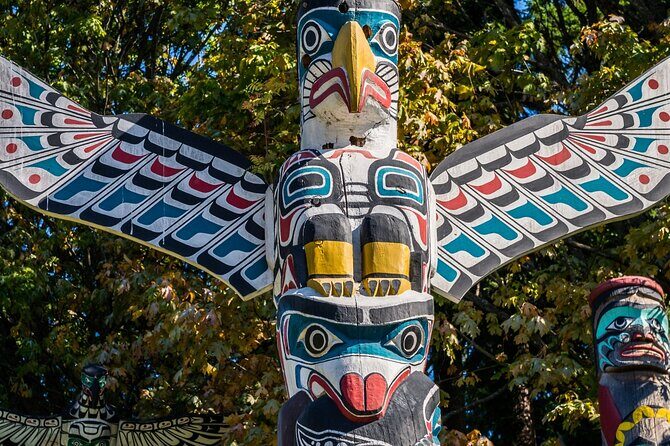
Stanley Park is the iconic stop that ties the whole bundle together. You’ll hear about the totem poles as works inspired by carved poles created by First Nations communities for centuries. The story emphasizes that the poles represent ancestry, stories, and spiritual symbols, and they stand today as a reminder of the people who first called this land home.
From a value standpoint, I like this moment because it gives depth without demanding hours. You get context quickly, and then you can choose how long to spend walking around.
Next is the Nine O’Clock Gun. The audio explains it’s a historic cannon in Stanley Park that still fires every evening at 9:00 PM. It also shares the famous 1969 mystery: the cannon was stolen and later returned only after a ransom donation was raised, pulled off by UBC engineering students.
This is one of those story moments where timing matters. If you want the full effect, plan your Stanley Park block so you’re there near 9:00 PM.
Prospect Point Lookout: sweeping views and a Squamish legend
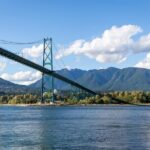
To finish the Stanley Park area, you head to Prospect Point Lookout. It’s described as an easy short walk from the parking area with sweeping ocean views and views of the Lions Gate Bridge.
Then the audio adds legend: a Squamish story of Shaunz and Siwash, said to have been turned to stone as a lasting example connected to perfect parents. Even if you don’t know local legends going in, this kind of story gives you something to hold onto while you look outward.
Practical tip: if the weather is foggy, this is still a good stop for the lookout walk, but your view payoff might vary. If it’s clear, you’ll likely feel why people return to this corner of the city again and again.
Who should book this bundle (and who might want a different plan)
This tour bundle fits best if you want structure without rigidity. If you like the idea of car-based exploration plus short walking beats, you’ll enjoy how the audio keeps you moving from beach to downtown. It’s also family-friendly in a practical way—Sunset Beach’s concessions and beach-friendly pacing make it simple for kids.
It’s also a strong choice for travelers who want context. The route doesn’t only show you places; it gives you specific details like the sealed stairwell inside Burrard Street Bridge and the long saltwater pool in Kitsilano.
If you’re the type who wants hours of uninterrupted beach time at each shoreline, you might feel constrained. This is built around stories and route flow, so you’ll likely need to add extra time yourself if beach lounging is your main goal.
Should you book the Vancouver Beaches & Downtown Audio Tour Bundle?
I’d book it if you want a smart, low-cost way to experience a wide chunk of Vancouver without hiring a guide for every neighborhood. The per-car value, offline-ready audio, and mix of beaches, UBC gardens, and downtown icons are a rare combo that’s easy to repeat later thanks to lifetime access.
I’d skip or adjust your expectations if your priority is only beach hopping with long breaks. The tour is more “story and snapshots” than “all-day beach.” If that sounds like a good match, this bundle is a great way to get oriented fast and leave with details you’ll remember after the photos fade.
FAQ
FAQ
How much does the Vancouver Beaches and Downtown audio tour cost?
It costs $14.99 per group, up to 4 people.
How long does the tour take?
Plan on about 2 to 3 hours. The audio route itself is described as roughly 1 to 2 hours to complete, depending on how long you pause for photos and breaks.
Is the tour offered in English?
Yes, the audio tour is offered in English.
Does it work offline without cellular or Wi-Fi?
Yes. You’ll download the tour first, and then it works offline afterward. Offline maps are included.
Do I need to buy attraction tickets for the stops?
No. Admission tickets, passes, and reservations are not included, so you won’t be expected to purchase them as part of the tour.
Does the tour have an expiry date?
No. It includes new lifetime access with no expiry, so you can use it on any trip as many times as you want.
What hours is the activity available?
The opening hours are 6:00 AM to 9:00 PM, Monday through Sunday.
Can I cancel for a full refund?
Yes, you can cancel for free up to 24 hours in advance for a full refund. If you cancel less than 24 hours before the start time, the amount paid is not refunded.