REVIEW · WALKING TOURS
Vancouver Old Town Treasure Hunt: Self-Guided Walking Game
Book on Viator →Operated by Questo · Bookable on Viator
Why walk Vancouver with riddles
This self-guided offline-friendly game turns landmark spotting into self-paced challenges, with 14 puzzle steps that nudge you to look closely at the city. It is a safe, budget-friendly way to explore on your own schedule, but one tricky clue can slow you down if you do not use the app’s help options.
I like that you get real architecture and old-city context without being stuck with a group. You are starting at 355 Burrard Street and ending near Maple Tree Square by Water Street, so you get a tidy walk through some of Vancouver’s most character-filled corners in about 90 minutes.
In This Review
- Key Things I’d Plan Around
- A Smartphone Treasure Hunt That Feels Like Walking With a Quiz
- Price and Value: $7.20 for 90 Minutes of City-Spotting
- How the Questo App Plays: Mobile Code, Offline Mode, and Self-Pacing
- Walking the Route: From 355 Burrard to Maple Tree Square by Water
- Stop-by-Stop: What You’ll Hunt for at Each Landmark
- The Marine Building: Art Deco on Burrard Street
- The Howe and Cordova Customs Warehouse: David Ewart’s Federal-Era Purpose
- Waterfront Station: Railway Power at the Pacific Terminus
- The Steam-Powered Clock: Time With a Personality
- The Dominion Building: Beaux-Arts with Warm Stone Details
- The Sun Tower: Louis D. Taylor and the World and Sun
- The Sam Kee Building: Chinese Community Roots at Pender and Carrall
- Gassy Jack Statue: Gastown’s Naming Story and a Darker Reassessment
- Gaoler’s Mews: Vancouver’s First Jail Site
- The Alibi: Heritage Space Near the Railyard and Ports
- Puzzles, Hints, and the Risk of Getting Stuck
- When This Hunt Is a Great Fit (and When It Isn’t)
- Should You Book the Vancouver Old Town Treasure Hunt?
- FAQ
- How long is the Vancouver Old Town Treasure Hunt game?
- What does it cost?
- Is there a live tour guide with this experience?
- Can I use it offline?
- What language is the quest in?
- Where do I start and where does it end?
- How many puzzle challenges are included?
- What is the cancellation policy?
Key Things I’d Plan Around
- Offline functionality means you are not as dependent on spotty cell service while walking.
- 14 puzzle-based challenges spread across landmark stops, so the story moves step-by-step.
- Gold Rush–inspired storyline keeps the hunt feeling like more than a plain walking tour.
- Hints and skip help if you are not a riddle-solver, so you can keep momentum.
- One phone can work for group play, which is handy if tech downloads slow down.
A Smartphone Treasure Hunt That Feels Like Walking With a Quiz
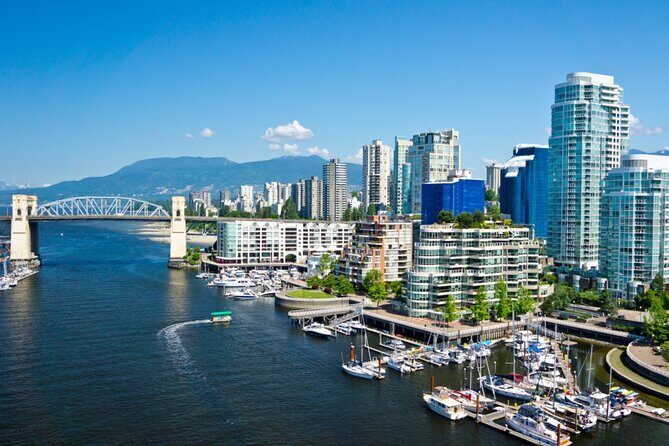
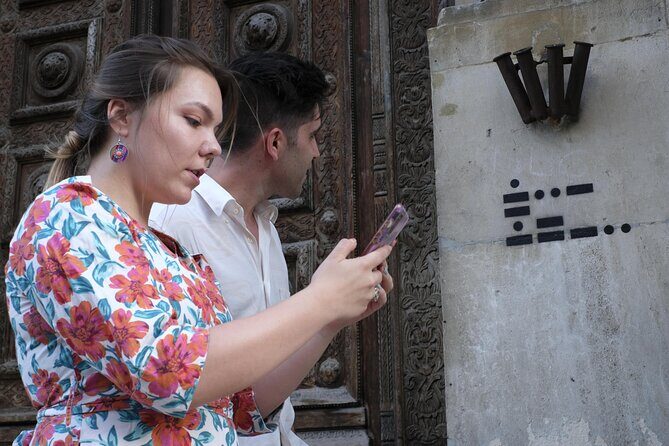
This is not a live-guided sightseeing tour. It is a self-guided walking game from Questo that uses your phone to deliver the story and the questions at each stop. That changes the vibe. Instead of listening for facts, you are scanning façades, entrances, corners, and street-level details to find answers.
I especially like the “look around” style of prompts. You are repeatedly asked to pay attention to what is right in front of you, which turns a casual stroll into an active scavenger hunt. And because it is mobile-based and private to your group, the pacing stays yours.
If you want a fully hands-on guide to answer everything instantly, this may not be your best fit. The trade-off is control: you can pause, resume, and move at the speed of your curiosity.
You can also read our reviews of more walking tours in Vancouver


Price and Value: $7.20 for 90 Minutes of City-Spotting
At $7.20 per person, this sits in the “why not” category. The value comes from the structure: you get a set time window (about 1 hour 30 minutes), a fixed number of challenge steps (14), and an offline-friendly way to experience the route. That is a lot of guided-feeling content for the price, especially since there is no extra cost for a live guide.
For families or friends, it can also be cost-effective compared with traditional tours that charge per person and run on a strict group schedule. There is also group discount potential, which can make it even easier to justify if you are traveling with multiple people.
The only cost risk is your time. If you get stuck on one puzzle, the walk can stretch. The good news: the app includes ways to keep you moving (hints and a skip button). The app is designed to keep the game going, not trap you.
How the Questo App Plays: Mobile Code, Offline Mode, and Self-Pacing
You do not need to meet a person holding a sign. You use a mobile access code to start the quest, and the app guides you step by step toward the Gassy Jack statue area. From there, the storyline and puzzle prompts carry you from stop to stop.
A big plus here is offline functionality. That matters in Vancouver’s downtown core because cell coverage can vary as you move between streets and buildings. Offline play gives you fewer worries about data and loading screens.
You also get flexibility: you can pause and resume whenever you like. That is practical if you want to duck into a shop, take a break, or move around slower than planned.
One caution from real-world experience: tech can be the weak link when multiple people try to use multiple phones. If you are a group, consider sharing one device to avoid download or syncing hiccups.
Walking the Route: From 355 Burrard to Maple Tree Square by Water
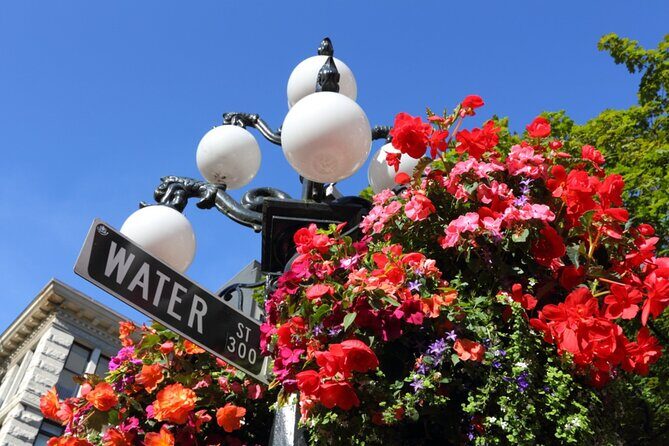
This hunt is built as a downtown-to-Gastown style loop. You begin at 355 Burrard Street and finish at Maple Tree Square, 1 Water Street. That routing is handy because it strings together landmarks you would otherwise need separate stops (or a rideshare) to see efficiently.
Expect a mostly urban walking experience: corners, building fronts, and street-level views. The best moments are when the clue matches the exact detail you are looking at, right where you stand.
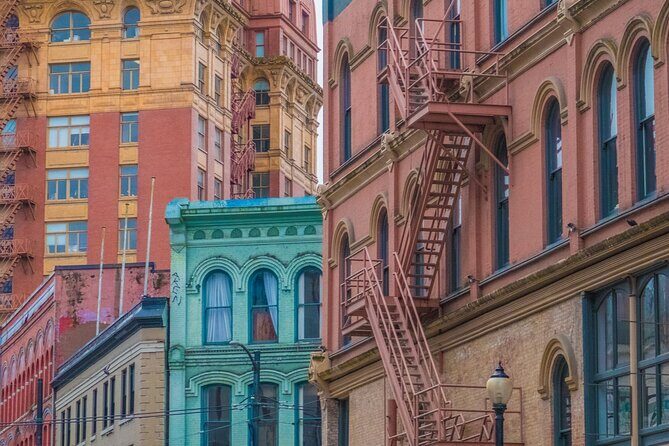
The itinerary includes stops tied to Art Deco, Beaux-Arts, early 1900s commercial buildings, railway-era transportation history, and Gastown’s old jail and saloon legacy. It is a good mix of “pretty to look at” and “important to understand.”
Stop-by-Stop: What You’ll Hunt for at Each Landmark
There are 14 puzzle-based challenges across these locations, so you will likely do more than one question at some stops even if the route description lists fewer location points. At each stop, your job is the same: look around for the clue, answer the question, and move on to the next location.
You can also read our reviews of more guided tours in Vancouver



The Marine Building: Art Deco on Burrard Street
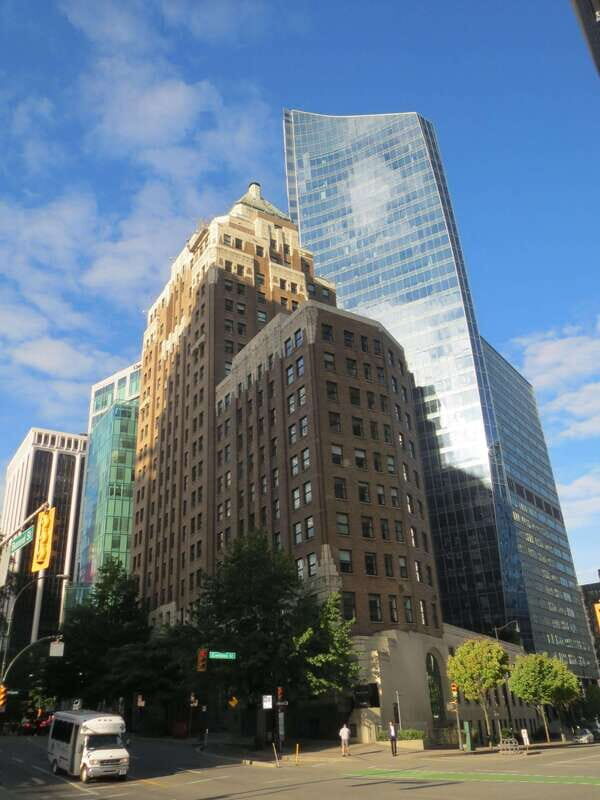
Your first anchor is the Marine Building (355 Burrard Street). Built in 1929–30 and associated with Toronto’s short-lived Stimson Developers, it was created for commercial shipping interests and the Vancouver Merchants’ Exchange. It is considered the best surviving example of Vancouver’s Art Deco style.
What to do here: slow down and study the building rather than just walking past it. The clue is designed around “look around” observation, so be ready to angle your head up and take in details.
Why it matters: starting with a standout style gives you an instant “this city has personality” payoff before the hunt pulls you deeper into old-town layers.
The Howe and Cordova Customs Warehouse: David Ewart’s Federal-Era Purpose
Next is a building at the corner of Howe and Cordova Streets. Construction ran from 1911 to 1913, designed by Chief Architect David Ewart for the federal government. It served as a warehouse for imported goods and was used by Customs until 1958.
What to do here: the puzzle expects careful attention to the building’s features and context. If you love architecture and civic history, this stop is a nice bridge between the glamour of Art Deco and the practical realities of early trade.
Small drawback: if you want constant action every step, this kind of clue can feel more “detail hunt” than “story moment.” That is not bad, just a different flavor.
Waterfront Station: Railway Power at the Pacific Terminus
You then reach Waterfront Station, built by the Canadian Pacific Railway and opened August 1, 1914. It became the Pacific terminus for transcontinental passenger trains heading to Montreal and Toronto. The current station is the third CPR station.
What to do here: look for clues tied to transportation-era significance. Even if you do not know rail history, the building’s role in connecting cities gives the story weight.
Tip: take a breath and read the surroundings. Clues tend to work best when you let the scene settle instead of rushing toward the next answer.
The Steam-Powered Clock: Time With a Personality
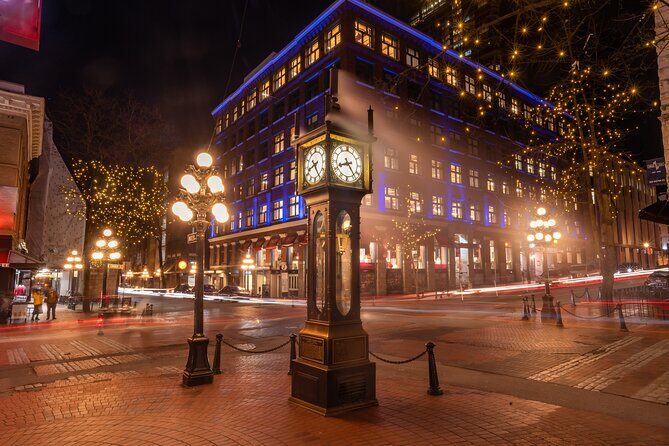
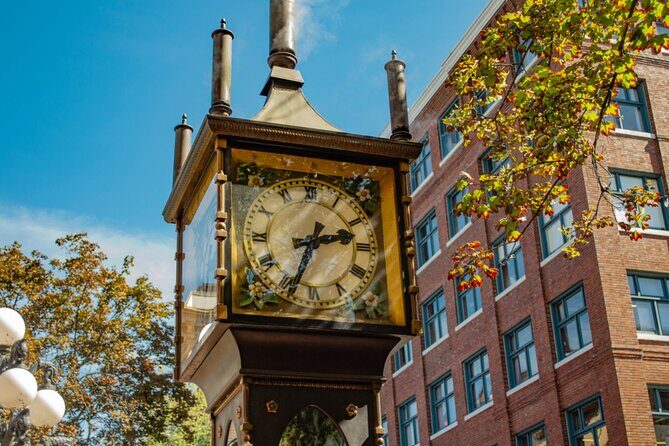
A short stop in the route’s middle is the famous antique-style clock built in 1977. It is powered by steam and whistles to tell the time.
What to do here: this one is great if you enjoy quirky local details. It adds a playful note right when the hunt’s rhythm is building.
If you time it right, the sound and motion of the clock can make the clue feel even more memorable, since it is not just visual.
The Dominion Building: Beaux-Arts with Warm Stone Details
The Dominion Building (1908–1910) was built by J.S. Heyler. It is known for a lively Beaux-Arts look, including terracotta spandrels and Corinthian columns at the front entrance.
What to do here: treat this like your reward stop. The clue draws you back to façade elements, so standing a little farther back first can help you spot symmetry and ornament.
Why it works: you get both learning and a satisfying “wow” moment. This is the kind of building you notice even when you are not looking for a puzzle.
The Sun Tower: Louis D. Taylor and the World and Sun
Next comes the Sun Tower, built in 1911–1912. Its heritage value connects to its landmark architecture, its association with Louis D. Taylor, and Vancouver World and Sun newspaper history. It also reflects how the business district expanded toward the eastern fringe of downtown.
What to do here: expect a clue tied to identity and significance, not just style. This stop is a reminder that “old buildings” are often tied to specific people and institutions.
The Sam Kee Building: Chinese Community Roots at Pender and Carrall
The Sam Kee Building dates to 1913. Located at Pender and Carrall, it is celebrated for architectural ingenuity and cultural significance to the Chinese community, plus the history of its namesake.
What to do here: read the street context as well as the building itself. These clues tend to make you slow down enough to recognize that the architecture is carrying community memory.
This stop can be emotionally more meaningful than the purely decorative landmarks, because it anchors the hunt in real cultural presence.
Gassy Jack Statue: Gastown’s Naming Story and a Darker Reassessment
Then you reach the Gassy Jack statue area. The monument is to “Gassy” Jack Deighton, a Vancouver saloon owner in the 1860s, and the Gastown neighborhood is named for him. His legacy has been re-evaluated in recent years, including details about his marriage to a 12-year-old Squamish girl, Quahail-ya, whose English name was Madeline Deighton.
What to do here: this is where the game’s storyline and history notes become more than trivia. The clue asks you to look around and connect the name to the broader meaning of Gastown.
Tone check: it is not a cheery story all the way through. If you want only light entertainment, this is the kind of stop that nudges you toward real-world context.
Gaoler’s Mews: Vancouver’s First Jail Site
In Gastown, Gaoler’s Mews sits in a spot with deep roots. The first building there was built in the mid-1800s and housed Vancouver’s first jail. After the great fire of 1886, it was replaced by a brick fire hall.
What to do here: pay attention to the surroundings and how this area evolved. The clue will be tied to what this place used to be, not just what it is now.
Practical note: Gastown streets can be busy at peak times. The game’s self-paced style helps you pause when you need to.
The Alibi: Heritage Space Near the Railyard and Ports
The route ends around The Alibi, described as a heritage site erected over 100 years ago and positioned along the railyard near Vancouver’s trade and shipping ports. The venue is also presented as a community spot for food, beer, and culture.
What to do here: treat this as your final “wrap-up” point. The hunt pushes you to connect place to purpose—industrial edges to community life.
If you like grabbing a bite after a walk, this is a natural place to take your time and decompress.
Puzzles, Hints, and the Risk of Getting Stuck
This hunt is puzzle-led, with 14 challenge steps. Some of them can be challenging in a good way, because they force you to look closely instead of glancing past façades.
The most helpful part: the app includes hints and a skip button. That means you can keep the hunt moving even if you are not great with riddles or you miss a detail.
That said, you can hit friction. There can be moments where a clue feels stuck, and if the app cannot find your path forward smoothly, you might lose time. Also, downloading or running the game on more than one phone can be tricky in real life, so plan for the possibility of sharing one device.
When This Hunt Is a Great Fit (and When It Isn’t)
You will probably love this if you:
- Want a budget-friendly way to explore downtown heritage at your own pace
- Enjoy turning “sightseeing” into a game
- Like architecture and street-level details more than long speeches
It also works well as a low-stress plan for small groups because it is private to your group.
You may want a different approach if:
- You strongly prefer a live guide to answer questions on the spot
- You are traveling with limited phone battery or no reliable way to charge while walking
- Your group expects to split into multiple phones without tech friction
Should You Book the Vancouver Old Town Treasure Hunt?
If you are looking for a fun, safe, and low-cost way to learn while walking, this is a smart pick. At $7.20, the value lands because you get 90 minutes of structure, 14 puzzle steps, offline-friendly play, and a route that covers major heritage landmarks without you needing to pre-plan every stop.
I would book it if you want a hands-on city experience and you are okay using hints when needed. I would skip it if your idea of a good tour is a person talking the whole time and never asking you to solve anything.
FAQ
How long is the Vancouver Old Town Treasure Hunt game?
It takes about 1 hour 30 minutes.
What does it cost?
It costs $7.20 per person.
Is there a live tour guide with this experience?
No. It is a self-guided smartphone experience, and it does not include a live tour guide.
Can I use it offline?
Yes. The tour is noted as having offline functionality, which helps it work more reliably while you walk.
What language is the quest in?
It is offered in English.
Where do I start and where does it end?
You start at 355 Burrard Street, Vancouver, BC. The end point is Maple Tree Squares, 1 Water Street, Vancouver, BC.
How many puzzle challenges are included?
You get 14 puzzle-based challenges.
What is the cancellation policy?
Free cancellation is available up to 24 hours in advance for a full refund. Cancel less than 24 hours before the start time and the amount paid will not be refunded.