REVIEW · CRUISES & BOAT TOURS
Vancouver: Catamaran Whale Watching Tour, Granville Island
Book on GetYourGuide →Operated by Wild whales eco tours · Bookable on GetYourGuide
Orcas are the main event here. This 5-hour Granville Island catamaran ride lets you scan the Salish Sea for orcas and humpbacks, with a marine naturalist guiding the whole experience. The one catch is that the trip length can stretch between 3 and 5 hours depending on where the whales are and the day’s weather.
I like how the boat setup gives you options: a covered cabin for when the wind bites, plus open viewing decks so you can still get those clear, satisfying sightlines. I also appreciate the whale-focused format, not just a generic sightseeing cruise—when you’re out there, you learn what you’re seeing and why it matters.
If you’re sensitive to motion or wind, plan on dressing for a chill day on the water, because the seas can be unpredictable even when Vancouver is sunny.
In This Review
- Key highlights you’ll actually care about
- Getting to Wild Whales Vancouver on Granville Island
- Jing Yu catamaran: the ride setup that keeps you comfortable
- The safety briefing: fast, useful, and worth paying attention to
- Salish Sea time: how the whale-watching hunt actually works
- Orcas, humpbacks, and dolphins: what you’ll be scanning for
- Sea lions and harbor seals: the quieter sightings with big payoff
- Why your tour is 3–5 hours (and why that’s not a downside)
- Included perks: what saves you time and hassle on the water
- What to bring (and what to skip) for a comfortable day
- Price and value: is $165 worth it?
- Who should book this tour, and who might want to think twice?
- Should you book Wild Whales Vancouver’s Jing Yu catamaran tour?
- FAQ
- Where is the meeting point?
- How long is the whale watching tour?
- What animals might you see?
- What is included in the price?
- Is food and snacks included?
- Do they offer pick up and drop off?
- Are pets allowed?
- Can you bring a drone?
- What is the cancellation policy?
Key highlights you’ll actually care about
- Jing Yu is semi-covered, with a sheltered cabin and open decks for flexible viewing
- Naturalist-led spotting helps you understand animal behavior, not just count species
- Orca and humpback watching is the core goal, with other wildlife possible like sea lions and seals
- A whale sightings guarantee gives you extra peace of mind if the day is quiet
- Washrooms on board make the time on the water easier, especially for families
- A real family-friendly design works for children and infants without forcing you to stay exposed
Getting to Wild Whales Vancouver on Granville Island
Your trip starts at Wild Whales Vancouver on Granville Island, at 1806 Mast Tower Ln. This is south of downtown, and it’s reachable by car, public transport, and the small local ferry service. If you drive, you’ll be using the paid parking around the Island—arrive early in summer, because Granville Island gets crowded fast.
One practical tip: treat the meeting time like part of the experience, not a formality. You’re asked to arrive about 45 minutes before departure. That buffer matters because you’ll want time to get oriented, find the office, and get settled before you’re herded onto the vessel.
This is also a good spot for people who like to combine activities. Before or after you’re on the water, you can wander Granville Island’s shops and food stalls. Just remember: your focus here is the sea, so keep your schedule clean enough that you don’t feel rushed.
You can also read our reviews of more boat tours in Vancouver

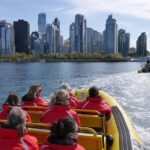

Jing Yu catamaran: the ride setup that keeps you comfortable
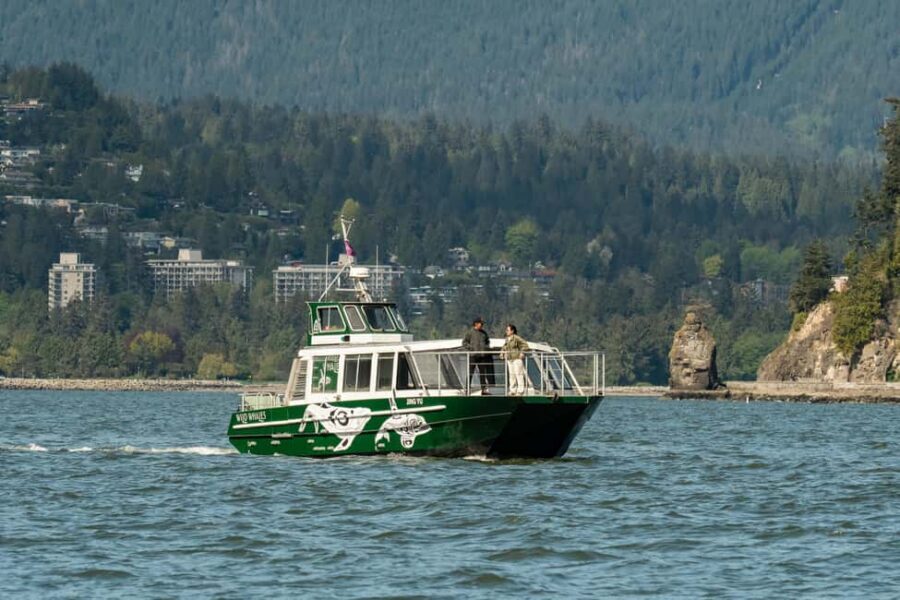
The vessel you’ll be on is Jing Yu, a custom-built semi-covered catamaran. That design is a big deal because it solves two problems at once: protection from wind and spray, and still enough open deck time for serious whale watching.
Here’s the layout in plain terms. You’ll have a covered cabin that helps you stay warmer and more comfortable when the weather turns. At the same time, there’s an open front deck, plus open decks near the rear. That means you can switch locations as the boat maneuvers—indoors when you need comfort, out on deck when animals surface.
Why that matters: whale tours are rarely a smooth “look in one direction for hours” situation. Whales and pods move, and the crew needs you positioned safely while they track sightings. With Jing Yu, you’re not stuck choosing between comfort and visibility.
The boat is described as a good match for all ages, including families with children and infants. If you’re traveling with kids, this flexibility can save the day—toddlers don’t always want to be out in the wind the entire time.
The safety briefing: fast, useful, and worth paying attention to
Right after you meet at Wild Whales Vancouver, the process begins with a safety briefing. Plan for about 30 minutes here.
I always think of this part as your “read the rules, then relax” moment. You’ll learn how to move around the vessel, how to handle deck areas, and how the crew expects everyone to behave while watching wildlife. The rules are straightforward and focused on safety around moving water and active marine animals.
Also note what’s specifically not allowed on board: pets, drones, alcohol and drugs, and touching marine life. There’s also a no-firework rule. The point is simple: keep the experience calm and controlled so the animals aren’t disturbed and you can watch without chaos.
One more practical note: because the tour can run for several hours and whale sightings are never guaranteed, you’ll want to use the briefing time to get settled—where you’ll sit, how you’ll dress in layers, and where you’ll stand when the spotting starts.
Salish Sea time: how the whale-watching hunt actually works
Once you’re out on the Salish Sea, the day turns into guided wildlife viewing. You’ll have scenic views as you head toward the areas where sightings are likely, and then the tour shifts into watching and listening for animal activity.
This is a guided tour with a marine naturalist. The naturalist role is one of the best reasons to book this kind of trip. You’re not just told what an animal is—you’re usually taught how to read behavior. That can include what you should notice about surfacing patterns, how pods move, and what’s happening around feeding or travel.
For the star species, here’s what you can hope to spot: orcas, humpback whales, and also dolphins in the mix. The description also mentions grey whales as possible sightings. In addition, you may see sea lions and harbor seals.
From the style of guiding described—people like naturalists Marcos and Julia are highlighted in past departures—you should expect a tone that’s both fun and educational. You’ll be given enough context to keep your brain engaged, which matters when whales don’t show up on a tight schedule.
And yes, this kind of tour needs patience. This isn’t a theme park with set performances. The payoff is that you’re watching animals behave naturally, not doing tricks for your camera.
Orcas, humpbacks, and dolphins: what you’ll be scanning for
Here’s the value of being on the water instead of watching wildlife through a window or a screen: on a good day, you can see scale, movement, and the way different animals interact with the environment.
For orcas, the big wow factor is not just the sighting—it’s what you learn when you see them in motion. The experience is designed to help you recognize behavior, so you can tell when something looks like hunting or when a pod is traveling. One past guide experience noted orcas in active situations, including seeing predation behavior up close, which is exactly the kind of moment that turns a normal sighting into a story you’ll remember.
Humpbacks tend to be more about breath timing, larger surface events, and sometimes brief appearances that still feel huge because of body size. If you’re lucky enough to spot one, the crew will guide you on where to look and how to keep your attention on the water instead of getting distracted.
Dolphins are a different kind of excitement. They can pop up quickly, and when they’re active, it changes the energy of the boat. Dolphins also often indicate that the waters are alive with food sources, which can keep the entire search moving.
Even when the main whale targets are far apart, dolphins and small marine mammals can keep the watch interesting. The tour is set up so you’re not just waiting for one species.
You can also read our reviews of more sailing experiences in Vancouver
Sea lions and harbor seals: the quieter sightings with big payoff
Not every great moment is a whale splash. Sea lions and harbor seals can be just as memorable because they show you another side of the ecosystem.
Seeing sea lions and seals helps you understand the Salish Sea as a system, not a single-species documentary. When you watch them alongside other animals, it gives you a more realistic view of how marine life overlaps—where food might be, how predators and prey share space, and what’s going on in the water that day.
If you’re traveling with kids, these “smaller” wildlife moments often become easier wins. They’re usually simpler to spot than whales, and they keep the excitement going even when whales are taking their time.
Why your tour is 3–5 hours (and why that’s not a downside)
The tour runs about 5 hours total, but it can fall between 3 and 5 depending on weather, whale location, and other conditions.
That variability can feel scary on paper—nobody wants a trip that might run short. But in whale watching, flexibility is part of the deal. You’re not controlling where animals go. The crew controls safety and positioning, while the wildlife controls the schedule.
What you can do is plan for a day with a little breathing room. Treat the tour time as a window, not a fixed appointment. This also helps you avoid stress if you’re pairing the trip with another Granville Island activity afterward.
This is where the whale sightings guarantee matters. It’s not a promise that you’ll see everything, but it’s a built-in safety net aimed at giving you a fair outcome if the day doesn’t deliver the usual sightings.
Included perks: what saves you time and hassle on the water
A tour like this is worth it when the logistics are handled. Here’s what’s included:
- A 3–5 hour whale watching tour
- An experienced captain
- A marine naturalist guide
- Washrooms
- A whale sightings guarantee
- Optional warmth gear: a wind breaker or suit for warmth
The optional wind breaker/suit is one of those “pay attention” details. If you run cold easily, bring a warm layer anyway, but also know you might be able to grab extra protection on board. That can be especially helpful if you’re caught between seasons or if fog and wind pick up.
Also plan to bring your own food and drinks, because snacks aren’t included. If you want to keep energy up during the wait for sightings, pack something simple and travel-friendly. You’ll also want a reusable water bottle.
What to bring (and what to skip) for a comfortable day
For a day on the Salish Sea, your packing list is about warmth, visibility, and staying ready for quick sightings.
Bring:
- Warm clothing and extra layers
- A hat
- Camera (and don’t forget a charged battery)
- Food and drinks
- A reusable water bottle
The “don’t forget” category here is layers. Water trips can feel colder than you expect, and wind can change your comfort fast. Even if the forecast looks mild on shore, the boat can feel cooler once you’re moving and exposed.
Skip:
- Pets (not allowed)
- Drones (not allowed)
- Alcohol and drugs
- Anything that risks disturbing wildlife, including touching marine life
This is a rule set that helps everyone watch comfortably—and keeps the animals from getting pushed around.
Price and value: is $165 worth it?
At $165 per person, this isn’t a budget activity. But it can be good value if you understand what you’re paying for: time on a boat designed for viewing, guided wildlife interpretation, and a whale-focused outing with a sightings guarantee.
Here’s the honest math most people do. You’re paying for:
- Boat access for several hours
- A naturalist’s guidance during the hunt
- A captain and crew managing safe navigation
- Built-in comfort items like washrooms
- The chance to see high-impact wildlife like orcas and humpbacks
If you’ve never gone whale watching before, this is the kind of first trip that can set a high standard. The naturalist component is a real value add because it turns random sightings into something you can understand and remember.
If you’re already an experienced birder or marine watcher and you’re mostly chasing very specific behaviors, you might compare options. But based on the format—guided, semi-covered, family-friendly—it’s positioned as a smart choice for people who want a memorable day without the chaos of fully open, all-weather boats.
Who should book this tour, and who might want to think twice?
I’d book this tour if you want:
- A guided wildlife experience with real learning built in
- A semi-covered boat that makes whale watching possible with kids
- The chance to spot multiple species, not just one
- Comfort upgrades like washrooms and optional warmth gear
Consider thinking twice if:
- You’re very sensitive to motion or wind, since the sea can be rough even with a covered cabin available
- You’re pregnant, since the tour notes it is not recommended for pregnant people
In general, this tour fits best when you want a hands-on nature day—less classroom, more learning while you watch the ecosystem in action.
Should you book Wild Whales Vancouver’s Jing Yu catamaran tour?
If you’re visiting Vancouver and you want one standout marine day, I’d lean yes. The combination of semi-covered comfort, a naturalist-led experience, and the focus on orcas and humpbacks gives you a strong chance of a trip that feels worth the money even if the whales don’t appear on a perfectly timed schedule.
Book it if you can handle a few hours outdoors and you’re willing to be patient while the crew tracks wildlife. Skip or choose another format if cold weather or motion is a dealbreaker for you.
Either way, if you go, dress for wind, bring a camera, and give your attention to the water. When the animals show, that’s when the Salish Sea feels like it’s alive in front of you.
FAQ
Where is the meeting point?
You meet at Wild Whales Vancouver on Granville Island at 1806 Mast Tower Ln, Vancouver, BC V6H 4B6.
How long is the whale watching tour?
The tour runs about 3 to 5 hours, and the total duration shown is 5 hours.
What animals might you see?
The experience mentions potential sightings of orcas, humpback whales, grey whales, dolphins, sea lions, and harbor seals.
What is included in the price?
Included are the 3–5 hour whale watching tour, an experienced captain, a marine naturalist guide, washrooms, an optional wind breaker or suit for warmth, and a whale sightings guarantee.
Is food and snacks included?
No. Food and snacks are not included, so you’ll want to bring your own.
Do they offer pick up and drop off?
No pick up and drop off is included.
Are pets allowed?
No, pets are not allowed on the tour.
Can you bring a drone?
Drones are not allowed.
What is the cancellation policy?
You can cancel up to 24 hours in advance for a full refund.