REVIEW · GASTOWN TOURS
Self-Guided Smartphone Walking Tour of Gastown
Book on Viator →Operated by VanWalks · Bookable on Viator
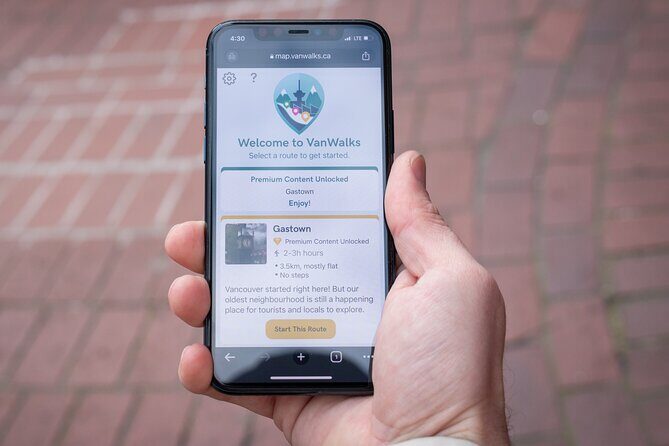
Gastown feels like it has its own soundtrack. This self-guided smartphone walk strings together major sights and quick stories across 2 to 3 hours, from Waterfront Station to Victory Square, with an English mobile ticket.
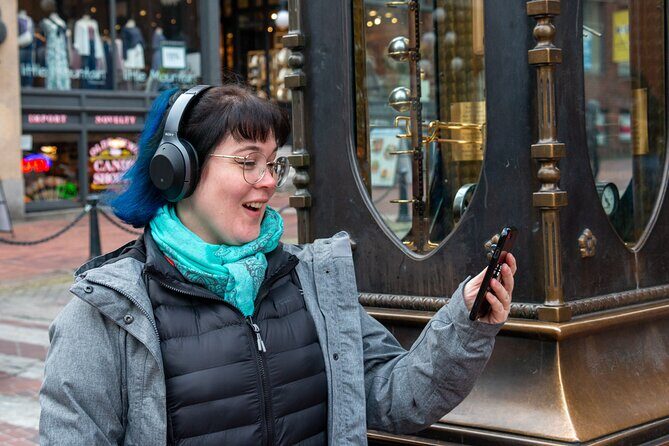
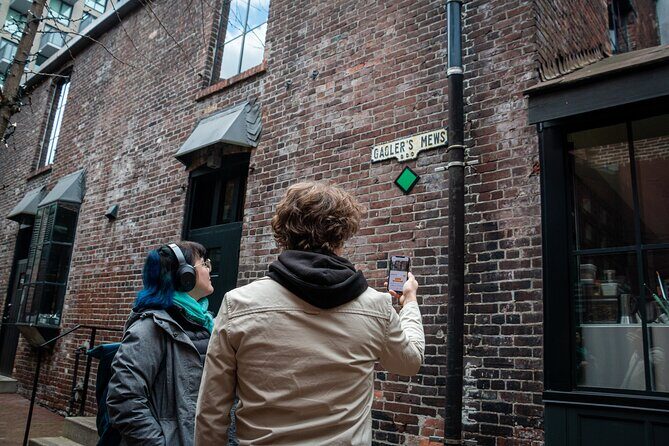
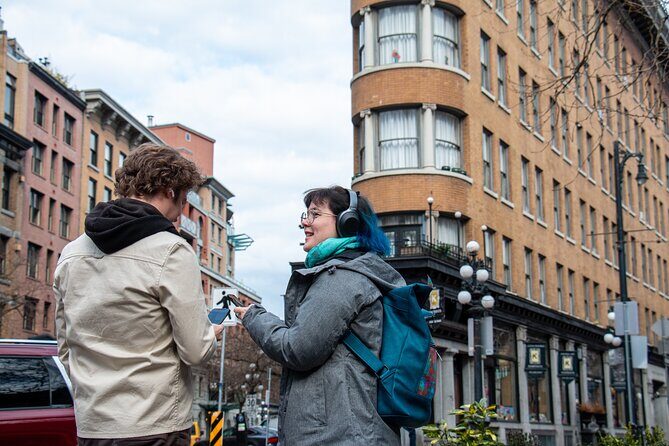
I especially like that it’s at your own pace, so you can slow down for photos or duck into a coffee stop without feeling behind. I also like the read-or-listen style of the content at each stop, which keeps the experience moving even when you’re standing in a busy street.
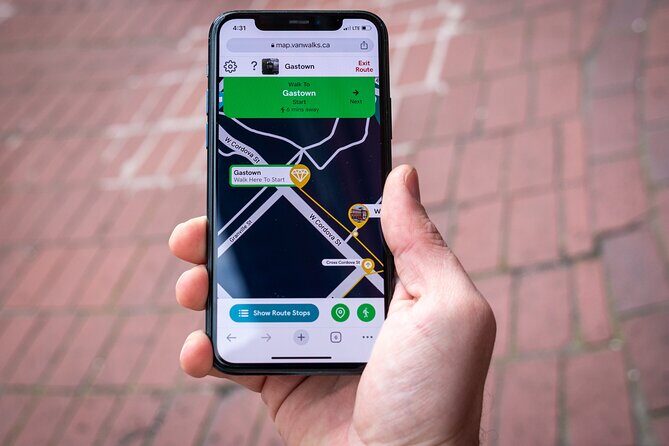
One possible drawback: you’re relying on your phone working well, and you’ll want enough battery and connectivity, since your device, headphones, mobile data, and an extra battery pack aren’t included. Also, the route can be a little tricky if the app code or directions don’t load smoothly at the start.
In This Review
- Key things to know before you go
- Why a smartphone walk makes Gastown easy to enjoy
- Start at Granville Square, finish at Victory Square (and how that helps)
- Waterfront Station’s reputation, then Harbour Centre’s landmark silhouette
- Steam Clock magic (and the fact-check you didn’t know you needed)
- Blood Alley, Maple Tree Square, and the stories that explain the street names
- Hotel Europe and the Police Museum: when glamour turns sinister
- Woodward’s closure, redevelopment impact, and why locals felt it
- Vancouver’s oldest operating pub and the Dominion Building’s brief reign
- A park stop where World Wars shaped Canadian identity
- Price and value: $4.85 for a flexible plan that uses your time well
- Tech reality check: avoid the app start-up hiccups
- Who should book this Gastown smartphone tour?
- Should you book it?
- FAQ
- How long is the self-guided Gastown smartphone walking tour?
- How much does the tour cost?
- Is this tour guided by a person in real time?
- What language is the tour available in?
- Do I need to pay admission fees at the stops?
- Where does the tour start and end?
- What do I need to bring?
Key things to know before you go
- Self-guided, private-by-group feel: only your group uses the route content, with no meeting-time pressure.
- Strong “story per stop” pacing: most stops are short, so you cover a lot without rushing.
- Premium Gastown route plus two free extra walks: you get Chinatown and Coal Harbour as bonus walking routes.
- Real-world tech dependency: you’ll need your own phone setup, and a smooth app start matters.
- End right in the thick of Gastown: you finish at Victory Square near the area people actually want to linger in.
Why a smartphone walk makes Gastown easy to enjoy
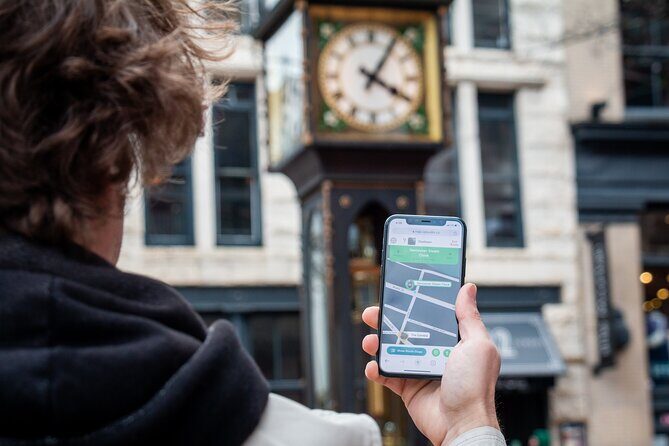
Gastown works well as a self-guided experience because it’s compact and visual. You can look up, scan signage, and then let the next stop’s info guide your walk. This format is perfect when you don’t want a group schedule holding you in place.
The tour is also a good fit if you like “small dose” history. Each stop is built for quick learning while you’re actually standing in the spot—rather than reading about it later in a museum. And because it’s offered in English with a mobile ticket, you’re not juggling printed pages.
Another practical win: the tour runs across the entire day window listed for the experience, which means you can choose a time that matches your energy level. If you’re a morning walker, great. If you want an afternoon stroll, you can do that too.
You can also read our reviews of more walking tours in Vancouver


Start at Granville Square, finish at Victory Square (and how that helps)
You begin at Granville Square and PWC Place (Lot #525200) and end at Victory Square on W Hastings St (200 W Hastings St). That matters more than it sounds. Starting and ending in different parts of central Vancouver helps you move through the city instead of turning around the whole time.
It also helps with planning food and transit. Granville Square is a busy, easy-to-find area with lots around it, so your start feels simple. Ending at Victory Square drops you right into Gastown’s gravity—the place where you’re likely to keep wandering after the 2 to 3 hours.
One more thing I appreciated: since the experience is near public transportation, you can structure your day around transit rather than trying to “loop back” to where you parked. If you’re also doing the added walking routes (Chinatown and Coal Harbour), this starting/ending flexibility is even more useful.
Waterfront Station’s reputation, then Harbour Centre’s landmark silhouette
Stop 1 is Waterfront Station, where you’ll learn about why it’s described as one of Vancouver’s most haunted buildings. Even if you’re not chasing ghost stories, this is the kind of stop that gives you a hook. It turns a functional transit-and-building area into something story-driven.
The cool part is how that changes your “walking attention.” Instead of just noticing architecture, you start looking for details that match the tale you’re hearing. That kind of mental switch is exactly what keeps a self-guided tour interesting.
After that, you hit a stop centered on Harbour Centre—its iconic tower and the famous exterior facing elevators. This is the opposite of the ghost angle, in the best way. One minute you’re thinking about eerie reputation; the next you’re noticing a bold modern landmark that’s easy to spot from street level.
A small caution: both of these are in areas where foot traffic can be heavy. You’ll want to time your reading/listening so you don’t block sidewalks while you get your bearings.
Steam Clock magic (and the fact-check you didn’t know you needed)
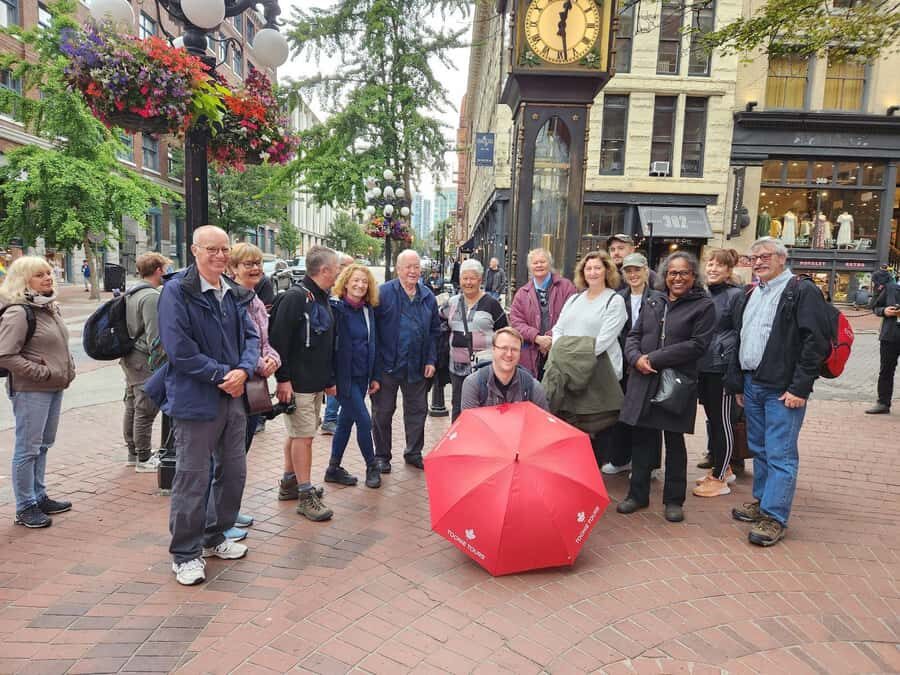
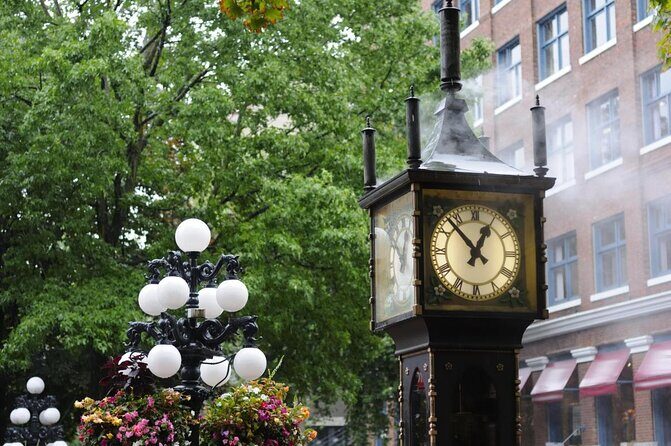
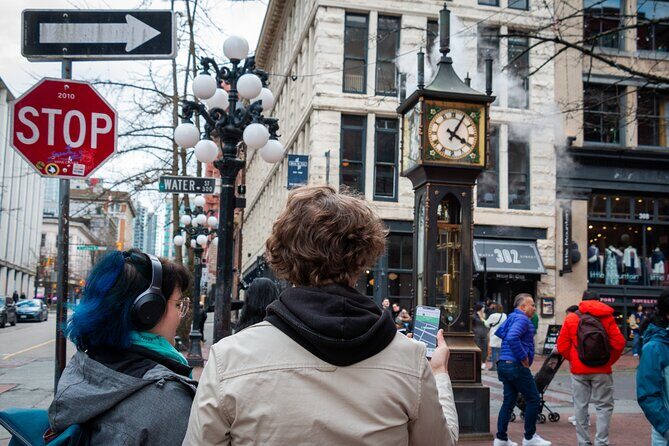
Next up is the Steam Clock, and the tour gives you the backstory of the oldest and most famous steam clock in the world. The useful twist here is that it’s not as old as you might guess. That single correction can make the whole stop feel more believable, because you’re not just repeating a myth—you’re learning the real timeline behind a landmark.
The Steam Clock also works as a mental reset. It’s a familiar Vancouver image, so you’ll likely recognize it fast. That makes it easier to stay oriented on a self-guided walk, even if you’ve only half-followed the directions.
You’ll also enjoy this stop more if you’re the type who likes “how it works” moments. The tour’s style is built for this: quick context, then you look again at what you thought you already knew.
Blood Alley, Maple Tree Square, and the stories that explain the street names
One of the more memorable story stops is Blood Alley. You’ll learn that it was once the site of public executions in Vancouver—and now it hosts some trendy restaurants. That contrast is the point. It teaches you how cities change function while still carrying traces of what happened there.
You’re not asked to treat it like a grim topic forever. Instead, you walk out of the story into the reality of what’s happening there now. That keeps the stop balanced and human.
Then you reach Maple Tree Square, one of Vancouver’s most important intersections. This is where the tour gets political and cultural in a way that still feels grounded. You’ll hear that the first pub that kicked off Vancouver was opened here by Gassy Jack—and you’ll also learn about his statue being torn down by protestors, plus what the tour says you should understand about why.
This is the kind of stop that turns a crossroads into a “why” question. If you like understanding how public space reflects public opinion, Maple Tree Square is worth your attention—even if you only spend about 5 minutes on it.
You can also read our reviews of more guided tours in Vancouver



Hotel Europe and the Police Museum: when glamour turns sinister
The Hotel Europe stop is all about contrast. The tour explains that it was the fanciest building in town when it was new, but later became a brothel. It’s a reminder that the same address can hold very different roles across time.
Standing in front of buildings like this, it’s easy to think history means the past stayed frozen. This stop fights that idea. You start seeing the city as layers—some polished, some uncomfortable.
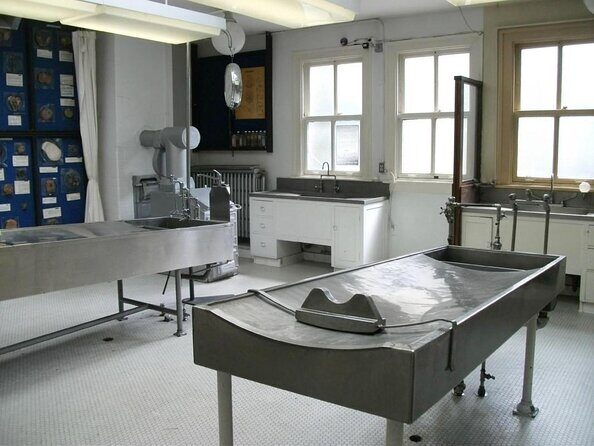
A short walk later, the Police Museum is built for deeper attention. You’ll learn it was a former coroner’s office, and you’ll hear about a room dedicated to confiscated weapons. The tour also points you to a morgue room with preserved tissue samples.
This is not a light “photo op” stop. It’s informative, but it’s also intense. If you’re sensitive to graphic or medical topics, you might want to move through this one at your own pace and take breaks. Since the tour is self-guided, you get that control.
Woodward’s closure, redevelopment impact, and why locals felt it
Next comes Woodward’s, Canada’s foremost department store for a long time. The tour focuses on why locals were so sad when it closed and how redevelopment affected the neighborhood.
Even if you’ve never shopped there, you can still understand the emotional role department stores played in city life: they were social anchors, not just retail. So this stop is really about how one building can affect a whole community’s routine and identity—and how redevelopment can change what a neighborhood feels like.
If you like a stop that connects places to people, this is it. It’s also a useful counterweight after the darker Police Museum material—because this is about community and change, not investigation rooms.
Vancouver’s oldest operating pub and the Dominion Building’s brief reign
The tour then takes you to Vancouver’s oldest operating pub, highlighting that it survived prohibition and a lot more. The value here isn’t only the age. It’s the resilience story—how a long-running spot can survive shifts in law, taste, and city patterns.
This stop is also practical for pacing. After a few heavier topics, it’s easier to think about today—what’s open, what still functions, and why it’s lasted.
Then you’ll learn about the Dominion Building, which was the tallest in the British Empire when finished. The tour notes that it only held that honor for two years before another nearby building was completed. That quick “only two years” detail is a good reminder that city skylines evolve fast, even when the architecture is meant to signal permanence.
If you’re into architecture and status symbols, this is one of the sharper stops. If you’re not, it still works because it gives you a simple timeline point you can remember later.
A park stop where World Wars shaped Canadian identity
Near the later part of the route, you’ll learn about an important park and how Canada’s contributions in the World Wars helped build national identity. The stop is framed as a story about how outdoor public spaces can act like identity markers—places people walk past but rarely interpret.
This is where the tour’s structure really pays off. You’ve walked from building stories (and darker ones) to civic change (Woodward’s, public space, and landmark endurance). The park stop helps round out that picture by pointing you to national-scale meaning embedded in something you can experience with your feet.
Price and value: $4.85 for a flexible plan that uses your time well
At $4.85 per person for a 2 to 3 hour self-guided walk, this is priced for people who want value without paying for a guided lecture. The math is straightforward: you’re buying the route content and structure, not a staffed guide.
What makes it feel like real value is the included extras: you get the Gastown walking route premium content, plus free walking routes in Chinatown and Coal Harbour. If you’ll do at least one of those extra walks later (or even during the same trip), the price becomes a lot easier to justify.
Do keep your expectations grounded. This isn’t a hands-on, assisted tour. Your experience depends on your phone and your ability to follow the map/directions on-screen. And admission is only specifically labeled as free for some stops—so think of many locations as “story stops” where you’re absorbing context, not always paying for entries included in the price.
Tech reality check: avoid the app start-up hiccups
A key theme in real-world use is that the experience lives or dies by the app. In one case, the app didn’t work at first, and a customer service rep was helpful, sending a link that got things moving. In another case, a tour access code issue was fixed quickly after reaching out by email.
That’s encouraging—but it also tells you to plan for the small risk that things don’t load instantly.
Here’s how I’d handle it as a practical traveler:
- Test your access before you’re standing right outside your first stop.
- If you need to contact support, do it before you’ve started timing your walking window.
- Give yourself enough battery margin. Since extra battery packs aren’t included, you don’t want to “save power” too aggressively and then lose your place.
- If you’re relying on map guidance, start early enough that a reroute won’t throw off your whole schedule.
Also, one note that matters for navigation: in at least one situation, directions were harder to follow because the speaker was hard to pinpoint on the map. That’s a reminder to use your map view actively, not passively.
Who should book this Gastown smartphone tour?
This works best for you if you:
- Like short, story-based stops and want to control your pace
- Prefer learning while walking instead of sitting in a classroom
- Want a low-cost way to cover major sights across Gastown in a few hours
- Don’t mind managing your own phone logistics (battery, connectivity, headphones if you choose to use them)
You might want a different style of tour if you:
- Don’t have a reliable smartphone setup for apps
- Prefer fully spoken, step-by-step verbal directions without using a screen
- Get frustrated when tech doesn’t cooperate right at the start
Should you book it?
Yes, with two conditions. If you’re comfortable using your phone for navigation and content, this is a smart value: $4.85 buys you a structured 2 to 3 hour walk with major Gastown landmarks, plus bonus routes in Chinatown and Coal Harbour. And if you like flexible pacing, this format fits your day.
My main “only book if” is the tech factor. Since the tour doesn’t include a device, headphones, or mobile data, you should be ready with battery and a plan for access. If that’s covered, you’ll likely come away with a better sense of Gastown—not just what it looks like, but what it remembers.
FAQ
How long is the self-guided Gastown smartphone walking tour?
It takes about 2 to 3 hours, depending on your pace and how long you linger at each stop.
How much does the tour cost?
The price is listed as $4.85 per person.
Is this tour guided by a person in real time?
No. It’s a self-guided smartphone walking tour, so your group completes the route at your own pace.
What language is the tour available in?
The tour content is offered in English.
Do I need to pay admission fees at the stops?
Some stops are marked as Admission Ticket Free, but the tour focuses on walking and learning at each location. Admission for any other specific site is not listed for every stop.
Where does the tour start and end?
It starts at Granville Square and PWC Place (Lot #525200, Granville St) and ends at Victory Square (200 W Hastings St).
What do I need to bring?
The tour does not include a mobile device, headphones, mobile data, or an extra battery pack, so you’ll need to plan for your phone and power. Service animals are allowed.