REVIEW · CHINATOWN TOURS
Vancouver: Gastown, Chinatown & Granville Island Bike Tour
Book on GetYourGuide →Operated by Vancouver Bike Tours · Bookable on GetYourGuide
Vancouver in 3.5 hours can feel like a sprint. This one stays relaxed while you sample Seawall views and the big character of multiple neighborhoods by bike. The route moves city-to-city without the usual stop-and-go, and your guide keeps the stops story-driven, not sightseeing-random.
I especially love how the tour mixes postcard sights with practical local stops, from the Granville Island Public Market smells to the machinery at the Gastown Steamclock. And I love that the ride is described as 18 km on a flat surface, so you get distance without punishing hills. One drawback: it is not a quick hit. It’s a full 3–3.5 hours, and there are no bathrooms at the starting shop, so you’ll want to plan ahead.
In This Review
- Key highlights you’ll feel right away
- From English Bay to the Seawall: a route that gives you momentum
- False Creek along the water: murals, community stops, and rail history
- Gastown’s Steamclock and Woodwards Tower: old tech meets new skyline
- Chinatown gardens: a meditative break that changes the pace
- Strathcona and Vancouver House: where local stories stick to real streets
- Granville Island time: artisan shops to market crunch
- Aquabus water-taxi ride and the wrap-up at the bike shop
- Price and value: what $72 buys you in real terms
- Who should book this bike tour, and who should skip
- Should you book Vancouver: Gastown, Chinatown & Granville Island Bike Tour?
- FAQ
- How long is the Vancouver Gastown, Chinatown & Granville Island bike tour?
- What’s the route distance and elevation like?
- What does the tour cost, and what’s included in the price?
- Where do I meet the tour, and what time should I arrive?
- Are bathrooms available at the meeting point?
- Is food included during the tour?
Key highlights you’ll feel right away
- English Bay start + Seawall ride: coastal path first, so you’re warming up with real views
- Osgemeos Giants mural: color and street-art energy along False Creek
- Gastown Steamclock + Vancouver House chandelier: quirky landmarks you’ll actually understand
- Dr. Sun Yat-Sen gardens: a quiet pause inside a formal Chinese garden space
- Granville Island market time: over 100 stalls, plus artisan shops before you park the bikes
- Aquabus water-taxi crossing: an easy way to link False Creek on the way back
From English Bay to the Seawall: a route that gives you momentum
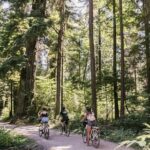
The tour begins on the sandy shores near English Bay Bike Rentals. You’ll ride out with the benefit of an early “orientation” segment: instead of hopping straight into traffic-heavy downtown, you ease into the city along the waterfront. That matters. Vancouver can feel spread out, and starting by the water helps your brain map the city quickly.
Before wheels roll, you’ll arrive at 1:45 PM for waiver forms and bicycle fitting, then set off at 2:00 PM. The start point is simple: walk into English Bay Bike Rentals, ask for Jeremy, and you’ll get set up. You’ll also want to come ready for a ride because there are no bathrooms on site, and the tour does not include food stops that would give you extra break options.
The ride itself is described as 18 km (11 miles) on a flat surface. That’s a big deal for comfort. It means you can spend your energy on looking around and listening, not grinding uphill. If you’re the type who likes to stop for photos and still finish feeling okay, this is designed for that.
You can also read our reviews of more cycling tours in Vancouver
False Creek along the water: murals, community stops, and rail history
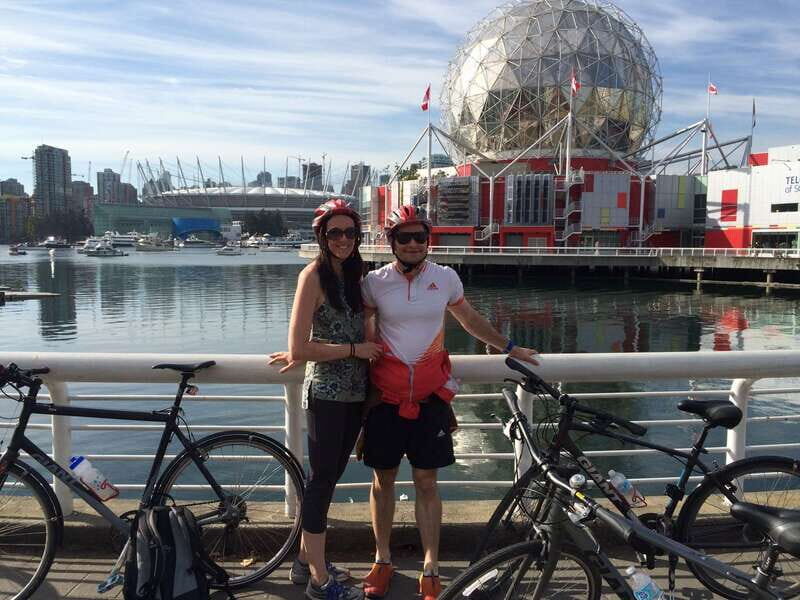
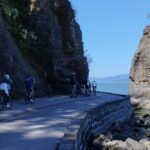
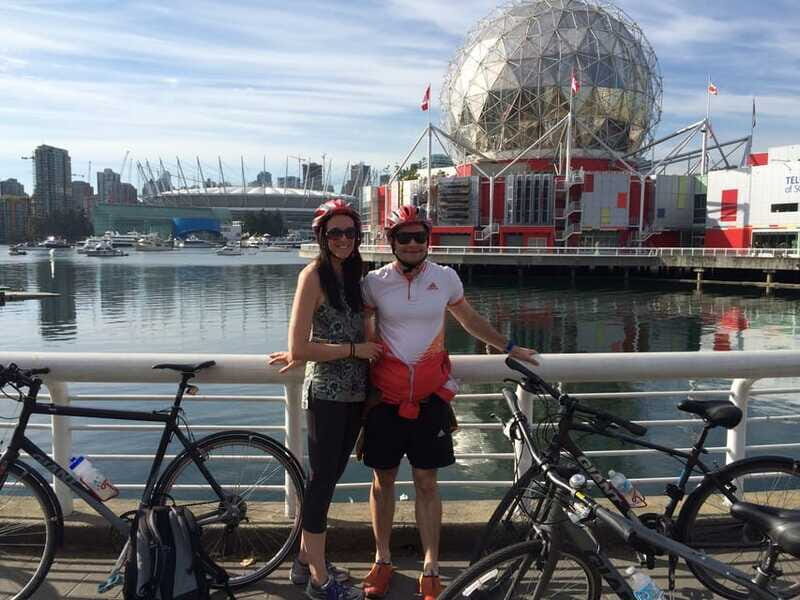
Once you’re rolling east, the route follows the beach path with your guide. This is where Vancouver’s coastal feel shows up hard: you’re moving along water, passing views that change every few blocks. One early stop is the False Creek seawall, where you’ll see the colourful Giants mural by Osgemeos.
I like stops like this because you’re not just seeing art—you’re learning how it fits into the city’s identity. Street art on a seawall isn’t random decoration; it’s part of how locals and visitors share the public space. After that, the tour leaves the seawall and heads toward Yaletown.
In Yaletown, you’ll make a quick stop at Roundhouse Community Centre. The guide ties it to Vancouver’s connection with the railroad and includes a moment about the first train across Canada. Even if you know nothing about rail history, the way this kind of stop works on a bike tour is practical: you’re in the neighborhood where the story lives, and you can look around while you listen.
Then you’re back into motion, riding along the stadium district by BC Place, The Park Casino, and Rogers Arena. This gives you a sense of how entertainment-and-sport zones sit next to everyday city movement. It also helps the tour flow. You’re constantly cycling through “layers” of Vancouver instead of locking into one single area.
Gastown’s Steamclock and Woodwards Tower: old tech meets new skyline
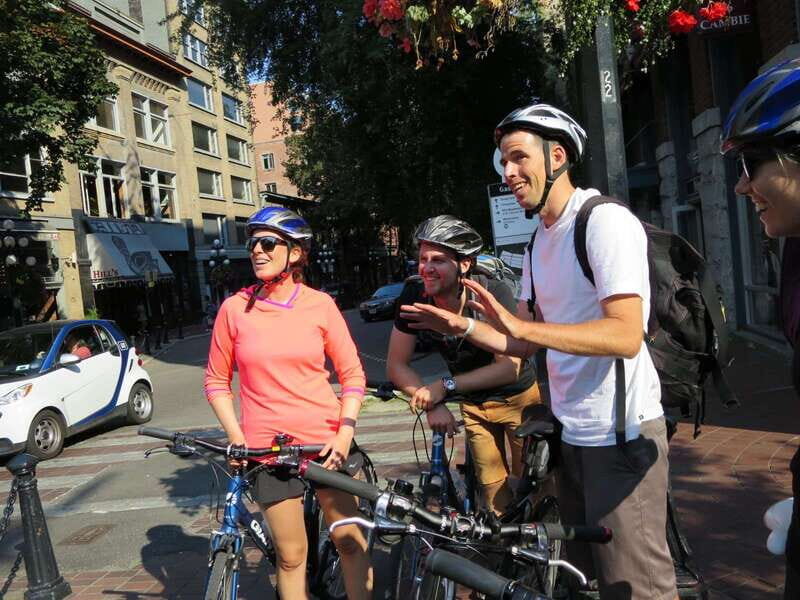
When you skip across the city to Gastown, it feels like you’re shifting eras. Gastown is Vancouver’s oldest neighbourhood, and the guide leans into the origin stories that people miss if they only glance at the cobblestone streets.
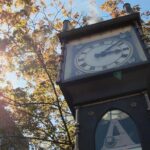
The headline stop is the Vancouver Steamclock. What makes it special here is not just the clock itself, but the fact that you’ll marvel at the machinery contained inside it. Watching something mechanical that old—still functioning in the middle of downtown—turns Gastown from a theme into a place with real working history.
You’ll also hear about Gassy Jack, one of Gastown’s signature origin characters. The guide-style focus matters: this isn’t presented as trivia. It’s the kind of story that helps you understand why the neighborhood looks and feels the way it does today.
From there, the tour includes a gaze up at Woodwards Tower. Again, the value is in the “in context” framing. You’re not viewing buildings as backgrounds for a photo; you’re seeing how architecture and redevelopment show up right where you’re riding. If you like understanding cities instead of only collecting landmarks, this part hits.
Chinatown gardens: a meditative break that changes the pace
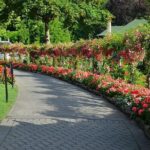
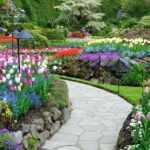
Then comes the quiet contrast: Chinatown and the Dr. Sun Yat-Sen Classical Chinese Gardens. Instead of pushing through more busy streets, you pause inside a formal garden space. The timing works well because you’ve already cycled through noise and density, so this stop feels like a reset.
This is also where you get a deeper layer of context about the Chinese community’s role in Canada’s development. The tour doesn’t treat the gardens as a standalone attraction. It connects what you’re seeing to why Chinese people shaped Canadian life.
You’ll also hear a quirky story tied to Chinatown: an otter tale. I like moments like this on a walking or bike tour because they break the “serious only” pattern. You remember the neighborhood because it has human weirdness, not just plaques and dates.
Strathcona and Vancouver House: where local stories stick to real streets
From Chinatown, you pedal through Strathcona, Vancouver’s first residential neighbourhood. This is one of the most effective parts of the tour if you want more than just downtown sights. Residential neighborhoods show a city’s identity without the performance. The streets feel like a place people live, not a place people visit.
You’ll pause in front of Nora Hendrix’s house and hear Vancouver’s connection to the legendary guitar player. That’s a nice example of how the tour ties celebrity culture to everyday geography. It’s not just name-dropping. It helps you see why Vancouver has artistic connections that go beyond famous venues.
Another highlight is a pause underneath Vancouver House’s massive spinning chandelier. The chandelier is the kind of thing you’d miss if you were walking quickly, and it’s exactly the sort of “wait, look up” moment that a guided pace makes easy. The guide’s job here is to tell you what you’re seeing and why it matters, and then you can just enjoy the visual impact.
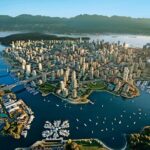
As you move along, you’ll pass through the Olympic Athlete’s Village as you return west along the south side of False Creek. That section helps you feel the whole city arc: from the older neighborhoods, through the cultural landmarks, and back toward the waterfront again.
Granville Island time: artisan shops to market crunch
Granville Island is where the tour slows down on purpose. You ride onto the island and do a slow roll past artisan shops and remaining factory elements. This is a good contrast to the downtown blocks you’ve been through: instead of polished showpieces, you see the working vibe that keeps the area interesting.
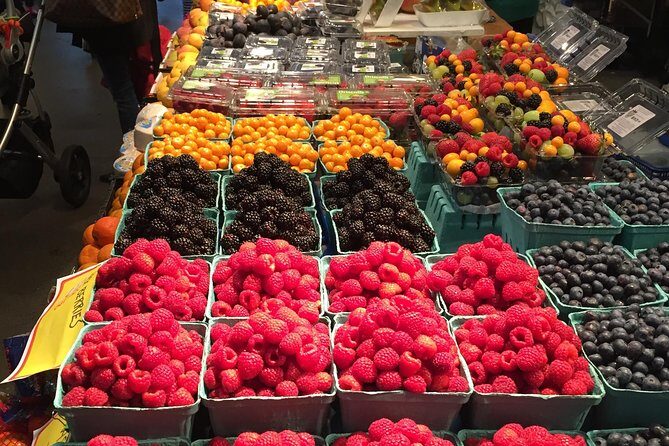
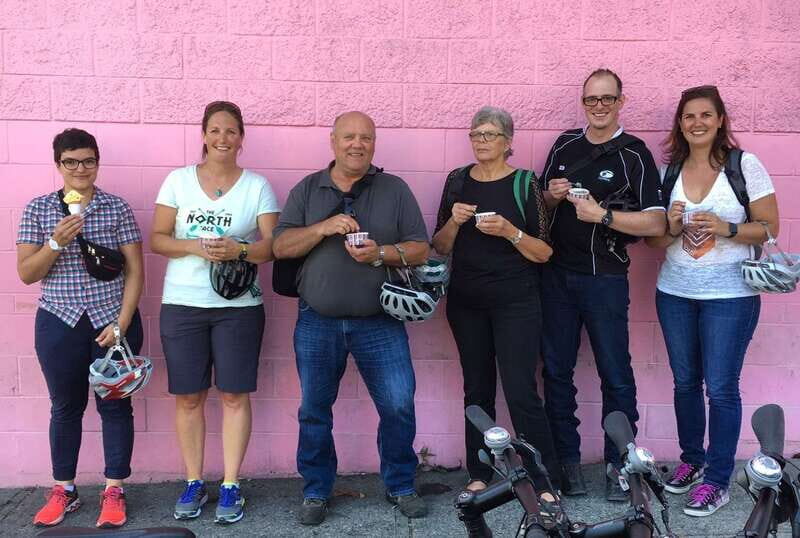
Then it’s bike parking and market time at the Granville Island Public Market. You’ll putter through the over 100 stalls. This is a real value piece of the tour because you get time where you can choose your own pace. If you want to browse seafood counters, snack your way through, or just look at the crafts, you can.
Keep in mind that food is not included. That’s not a deal-breaker, but it changes how you should plan your day. If you tend to snack a lot on market walks, bring a budget for yourself. If you don’t, you can treat it more like a stroll and souvenirs.
When you’re ready, you return to the bikes and head for the final waterfront connection.
Aquabus water-taxi ride and the wrap-up at the bike shop
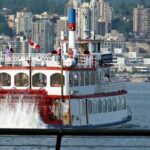
The tour finishes with a sea jaunt across False Creek using the Aquabus ferry system. This is one of those “why not do it this way” moments. Instead of taking the long route back on land, you get a quick water ride that also helps you see the shoreline from a different angle.
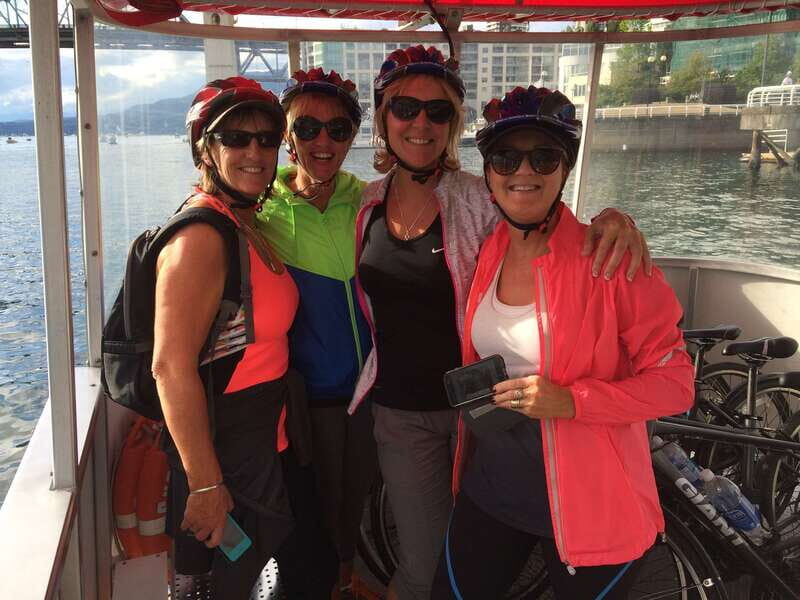
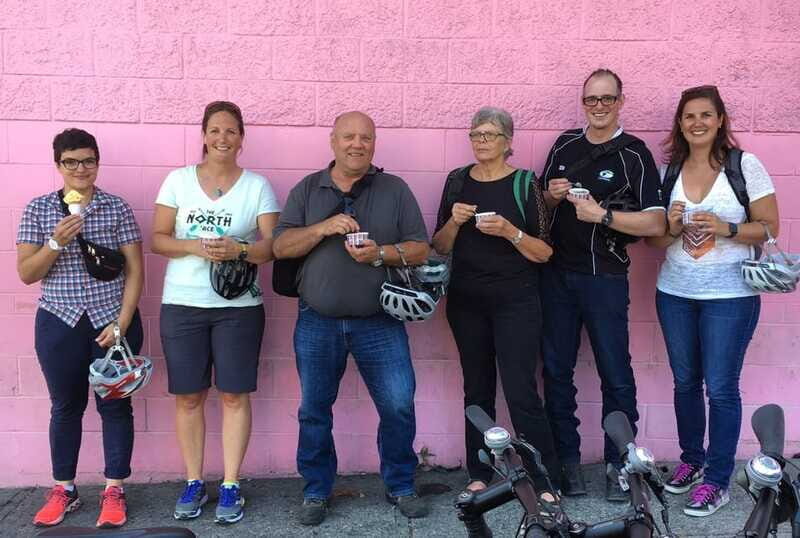
After the crossing, you return to the bike shop for a debrief. The guide provides a recommendation list and you’ll get the classic group selfie moment. I like these wrap-ups because the tour turns into a launchpad. You leave with a sense of what to do next, not just what you already did.
Price and value: what $72 buys you in real terms
At $72 per person for 210 minutes, this is priced like an organized “day compacted into a few hours” deal. What makes it feel fair is what’s included.
You get bike rental, a helmet, a water bottle, a tour guide, and an Aquabus ticket. Those items add up fast if you’re piecing them together on your own while also trying to coordinate route timing. You also get a small group limited to 10 participants, which keeps the pace manageable and makes it easier to hear the guide during stops.
The ride is flat and measured as 18 km. That means the structure of the route is designed to be doable for most visitors who can handle a steady bike ride. If you’re traveling with the goal of getting a city overview plus a few meaningful stops, you’ll likely feel like you got your money’s worth.
What you should budget separately is food and gratuities. Food is not included, and gratuities are not included either, so plan for that if market browsing turns into actual eating.
Who should book this bike tour, and who should skip
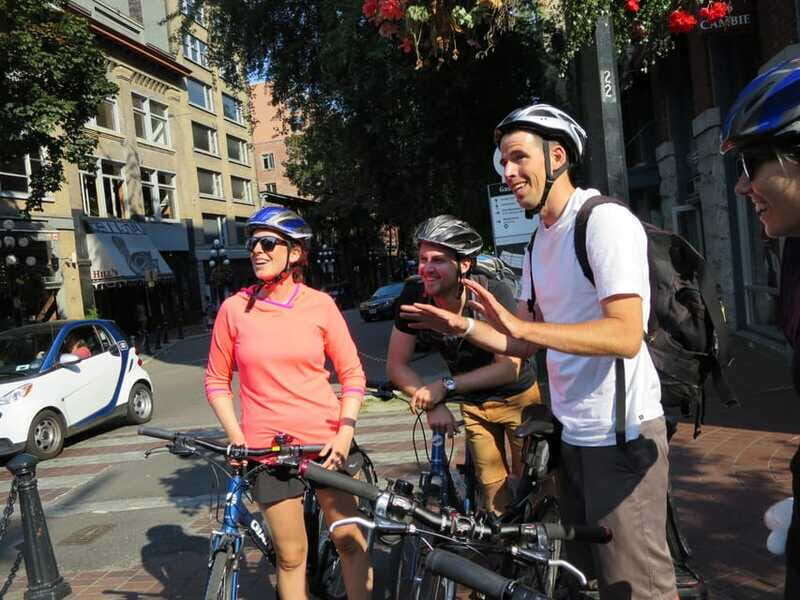
This tour is best for adults and older teens who want an efficient way to see a lot of neighborhoods without turning the day into a transportation puzzle. It’s also great for travelers who like stories attached to places—especially when those stories are connected to specific landmarks like the Steamclock, the Chinatown gardens, and that spinning chandelier.
It’s not suitable for children under 12 and it’s not suitable for people with mobility impairments, based on what’s listed. If either applies to your group, you’ll need a different format.
If you get nervous on bikes, don’t ignore that. The tour is described as 18 km on a flat surface and it’s meant to be rideable, but it’s still cycling for hours. Come with comfortable shoes and sunscreen, and don’t plan to treat this like a casual stroll.
Should you book Vancouver: Gastown, Chinatown & Granville Island Bike Tour?
I think you should book this if you want a fast, guided “Vancouver hits” loop that actually teaches you what you’re seeing. The combination of Seawall scenery, Gastown’s Steamclock machinery, Dr. Sun Yat-Sen Gardens, Strathcona’s neighborhood stories, and market time at Granville Island makes it hard for this to feel repetitive.
Also, if you care about guide quality, this tour has a clear strength: Jeremy. The tour information points him out at the meeting desk, and the tone from past participants is that he’s energetic and able to explain the neighborhoods in a way that sticks.
Skip it if you want lots of long museum-style stops, because food isn’t included and the day is built around riding and short, focused pauses. And if you need frequent bathroom access at the start, note that there are no bathrooms on site.
If your goal is to get oriented, see multiple sides of the city, and still finish with momentum for later plans, this one is a smart choice.
FAQ
How long is the Vancouver Gastown, Chinatown & Granville Island bike tour?
It runs for about 210 minutes, or roughly 3–3.5 hours.
What’s the route distance and elevation like?
The ride is 18 km (11 miles) and is described as flat.
What does the tour cost, and what’s included in the price?
The price is $72 per person. Included are bike rental, a helmet, a water bottle, a tour guide, and an Aquabus ticket.
Where do I meet the tour, and what time should I arrive?
Meet at English Bay Bike Rentals. Arrive at 1:45 PM for waiver forms and bicycle fitting, and the tour starts at 2:00 PM.
Are bathrooms available at the meeting point?
No. There are no bathrooms on site, but there is a Starbucks across the street for last-minute needs.
Is food included during the tour?
No. Food is not included.