REVIEW · TICKETS
Vancouver Science World Ticket
Book on Viator →Operated by Science World · Bookable on Viator
Science World turns science into something you can actually touch. I like the hands-on galleries and the way Live Science at Centre Stage keeps the visit moving. It’s also a solid value when you plan for a couple of hours of active exploring. The main consideration: it’s much more geared to young kids than to adults or teens.
Science World runs on energy, not quiet museum vibes. You’ll want to come with realistic expectations, because some highlights can be crowd-dependent and the OMNIMAX Theatre is currently closed for renovation.
In This Review
- Key highlights at a glance
- Tickets, timing, and what $26.70 gets you
- Entering Science World: the building’s layout is part of the fun
- Stop 1: Permanent Galleries that do the heavy lifting
- BodyWorks Gallery: learn how your body works
- Creative Technology Gallery: video game development, hands-on
- Eureka!: learn while you play
- Puzzles and Illusions: a break that still feels hands-on
- Sara Stern Gallery: from majestic to microscopic
- Tinkering Space (WorkSafeBC Gallery): experiment and build
- Live Science at Centre Stage: the hourly anchor
- Feature Gallery and temporary stops: Earth Matters and timing
- Ken Spencer Science Park: great when open, closed when it matters
- Wonder Gallery for kids under 5: the play zone that steals the show
- The OMNIMAX Theatre closure: what to do instead
- Crowds, pacing, and how to make the visit feel effortless
- Who this ticket is best for
- Quick practical checklist before you go
- Should you book Science World tickets?
- FAQ
- How long does Science World admission take?
- How much is the Vancouver Science World ticket?
- Is the ticket mobile?
- Is the OMNIMAX Theatre included?
- What’s included with the ticket?
- Are Live Science demonstrations included?
- Is the Ken Spencer Science Park open year-round?
- What’s the Feature Gallery schedule listed here?
- Are service animals allowed?
- What if I need to cancel?
Key highlights at a glance

- Live science demos at Centre Stage run hourly, giving you a built-in rhythm for the visit
- BodyWorks makes biology feel immediate, with an approachable look at how your body works
- Tinkering Space (WorkSafeBC Gallery) encourages trial-and-error problem solving
- Wonder Gallery for kids under 5 offers crawly, splashy play like a water table and a mess pit
- Ken Spencer Science Park is seasonal, closing Oct to Mar, so check what’s open
Tickets, timing, and what $26.70 gets you
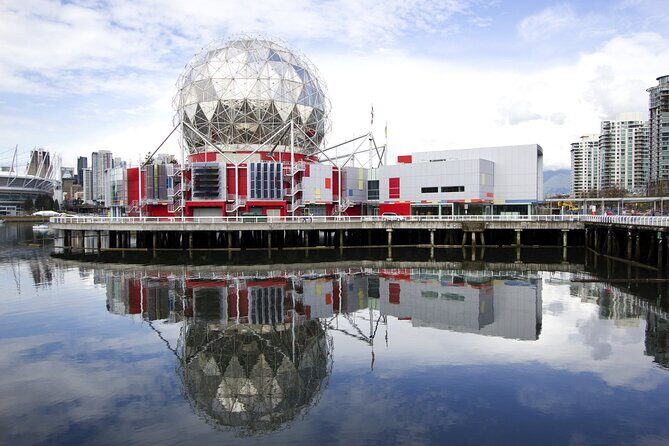
A Vancouver Science World ticket is priced at $26.70 per person for general admission, with the 5% GST not included (about CAD $1.79 per person). That extra tax matters if you’re budgeting tightly, especially for families.
Plan on about 2 to 3 hours. For many kids, that’s enough time to hit the main galleries and still catch a demo. For older kids and teens, you may need a bit longer if you end up repeating favorites or spreading out to reduce crowd pressure. (Science centers are the kind of place where you don’t want to rush.)
The ticket is a mobile ticket, and it’s a popular pick. On average, it tends to get booked around 7 days in advance, which is a good sign if you like having your plan locked in.
Value check: this isn’t a quiet “walk through rooms” museum. The price makes more sense when you show up ready to participate—touch exhibits, try hands-on stations, and time your visit around live demos.
You can also read our reviews of more tours and experiences in Vancouver



Entering Science World: the building’s layout is part of the fun
Science World is designed for movement. Even if you don’t follow an official route, you’ll naturally drift between areas because each zone changes the pace—some are discovery galleries, some are play-focused, and some are set up for repeating action.
A practical tip: give yourself a simple priority list before you arrive. For example, if you have a child under 5, anchor your plan around the Wonder Gallery first. If you’ve got school-age kids, make BodyWorks, Eureka!, and Creative Technology your core. Then you can wander into the smaller puzzle and experimentation spots without feeling like you “missed” something.
Also, don’t count on the OMNIMAX. The OMNIMAX Theatre is currently closed for renovation, so plan your time around the galleries and live demos instead of counting on a movie-style finale.
Stop 1: Permanent Galleries that do the heavy lifting

Science World’s permanent galleries are the backbone of the visit. These are the areas you’ll likely re-visit if you find one exhibit that really clicks.
BodyWorks Gallery: learn how your body works
The BodyWorks Gallery is one of the clearest “this is why science matters” stops. Instead of long explanations, it’s built to help you understand your body through interactive learning. Kids tend to enjoy the immediacy, and adults appreciate that it’s not just fact-dumping—it’s easier to grasp when you’re actively engaging with what you’re seeing.
If your group includes a mix of ages, BodyWorks is a good compromise because it offers multiple ways to explore.
Creative Technology Gallery: video game development, hands-on
In the Creative Technology Gallery, you can explore video game development in an interactive digital setting. This is especially helpful if your kid gravitates toward screens, art, and making things. Rather than just watching how games work, you’ll be in the flow of building and experimenting with ideas.
If your group includes a teen who likes tech but doesn’t want to “play like little kids,” this is often the sweet spot.





Eureka!: learn while you play
Eureka! is a high-energy gallery built around play-based learning. The point isn’t subtlety—it’s momentum. If your child learns best by trying and doing, Eureka! typically delivers.
The only tradeoff is crowd control. When kids are active at the same time, it can feel busy. If you’re sensitive to noise, pick off-peak times when possible and be ready to step back when areas get congested.
Puzzles and Illusions: a break that still feels hands-on
Puzzles and Illusions gives your brain a chance to slow down without turning the visit into homework. This is a good place for families who want something a bit more “thinky” in the middle of active play.
It also works well for mixed groups. While one child works on an illusion or puzzle, another might naturally find something else to try nearby.
Sara Stern Gallery: from majestic to microscopic
The Sara Stern Gallery is a nature-leaning journey, taking you through wonder from large-scale ideas to microscopic details. It’s the kind of gallery that encourages curiosity, even for kids who aren’t usually museum people.
If your family likes science that connects to the real world—animals, environments, the scale of life—this one tends to land well.
Tinkering Space (WorkSafeBC Gallery): experiment and build
In the Tinkering Space (The WorkSafeBC Gallery), you get practice with experimental construction and problem-solving. This is one of the best areas to visit with a child who likes to take things apart and remake them.
The key here is mindset: this space rewards effort. You’re not just looking for the “right” answer. You’re learning through trying, adjusting, and trying again.
Live Science at Centre Stage: the hourly anchor

A visit at Science World is smarter when you plan around Centre Stage, where Live Science demonstrations run hourly. Even if you don’t care about every single topic, the format helps you pace the day. You get a built-in reason to gather, watch, and reset your energy.
This also works well for families because you’ll naturally find a moment to sit together and then move out again into the galleries.
If you have multiple kids with different interests, Centre Stage is a common thread that keeps everyone engaged.
Feature Gallery and temporary stops: Earth Matters and timing

Science World also runs a Feature Gallery. At the time referenced here, Earth Matters is listed as running until Jan 9, 2025.
What this means for you: if your visit lines up with the feature period, it adds a “this is specific to right now” element that makes the ticket feel less repetitive. If it’s not the Earth Matters run when you go, you’ll still have permanent galleries, but you’ll lose that particular temporary spotlight.
So, check what the current feature is before you arrive if that’s important to your group.
Ken Spencer Science Park: great when open, closed when it matters

The Ken Spencer Science Park connects you to the living world, but it’s seasonal. It’s listed as closed Oct to Mar.
If you’re visiting during those months, don’t build your plan around outdoor exploration. You can still have a great trip by focusing on indoor galleries, live demos, puzzles, and the hands-on building spaces.
If you’re visiting during open season, park time can add a nice contrast to indoor exhibits. It also tends to help kids burn off energy more naturally.
Wonder Gallery for kids under 5: the play zone that steals the show

The Wonder Gallery is designed for kids under 5 and includes soft crawling spaces, a water table, a mess pit, and rope climbing.
For families with preschoolers, this is often the area that determines how happy everyone leaves. It’s playful, physical, and built to let little kids explore at their own pace. For younger kids, it’s also one of the easier places to keep attention because the activities are designed around movement and sensory play.
One caution: if you’re bringing an older child who wants challenge or tech-style learning, Wonder Gallery may feel too baby-ish. In mixed-age groups, set expectations and create a quick rotation plan so everyone gets at least one “best moment.”
The OMNIMAX Theatre closure: what to do instead

The OMNIMAX Theatre is closed for renovation. That matters because the theatre often acts like a “cool down” segment in a family’s plan.
If you were counting on a movie-style break, swap it mentally for a longer gallery loop. Consider giving yourself extra time in spaces like Sara Stern Gallery, Puzzles and Illusions, or BodyWorks, where you can slow the pace without losing engagement.
If your family likes screens, the Creative Technology Gallery may help replace some of that “watch and learn” structure, even though it’s not the OMNIMAX.
Crowds, pacing, and how to make the visit feel effortless
Science World can get busy, especially with younger kids moving through shared play spaces. Crowds aren’t a reason to skip it, but they do affect your experience.
Here’s what works in practice:
- Keep your day flexible. Start with the area most likely to disappear from your energy level first.
- Use the hourly Centre Stage demos as your reset points.
- Plan to revisit favorites. Kids often want repeats, and that’s part of why this ticket is worth it.
If you have a child who gets overwhelmed, aim for calmer areas like BodyWorks and Puzzles and Illusions as “breathers” between high-activity zones like Eureka! or the Wonder Gallery.
Who this ticket is best for
Science World is a great match if you’re bringing children who like to touch, test, and move. It’s also a strong family option because there’s enough variety to keep different ages busy.
- Best fit: families with kids roughly preschool through middle school
- Works well: tech-curious kids (Creative Technology Gallery)
- Great option: kids who learn by building and problem-solving (Tinkering Space)
- Consider first: adults or teens who want a more traditional, quiet museum experience. This place is more active than that, and some features (like OMNIMAX) may not be available.
Quick practical checklist before you go
A little prep saves time and reduces stress:
- Check what’s open, especially the OMNIMAX closure and the seasonal park hours for Ken Spencer Science Park.
- Plan for 2 to 3 hours, but don’t be afraid to stay longer if your group is still having fun.
- Expect a lot of kid energy in shared play areas, and plan your pace accordingly.
If you’re budget-conscious, remember the ticket price is before GST. It’s small, but it adds up fast with families.
Should you book Science World tickets?
You should book this ticket if you want a hands-on science outing that’s built around doing, not just watching. I’d particularly recommend it when you’re traveling with young kids or a mixed-age group where everyone needs something different to latch onto—BodyWorks, Creative Technology, puzzle areas, and the under-5 play world all cover different learning styles.
Skip or adjust expectations if you’re mainly looking for a traditional museum feel, or if your group strongly expects the OMNIMAX Theatre as part of the plan. Since it’s currently closed, you’ll want to build your day around the galleries and hourly live demos instead.
If you want a fun science day in Vancouver and you’re okay with an active, family-forward vibe, Science World is an easy yes.
FAQ
How long does Science World admission take?
Most visits are about 2 to 3 hours.
How much is the Vancouver Science World ticket?
The price is $26.70 per person, plus 5% GST (about CAD $1.79 per person).
Is the ticket mobile?
Yes, the ticket is a mobile ticket.
Is the OMNIMAX Theatre included?
General admission is included, but the OMNIMAX Theatre is currently closed for renovation.
What’s included with the ticket?
You get general admission, which covers access to the galleries and the listed included spaces.
Are Live Science demonstrations included?
Yes. Centre Stage offers live science demonstrations hourly.
Is the Ken Spencer Science Park open year-round?
No. It is seasonal and listed as closed from Oct to Mar.
What’s the Feature Gallery schedule listed here?
The Feature Gallery is listed as Earth Matters until Jan 9, 2025.
Are service animals allowed?
Yes, service animals are allowed.
What if I need to cancel?
You can cancel for free up to 24 hours before the start time for a full refund. Within 24 hours, the amount paid is not refunded.