REVIEW · CRUISES & BOAT TOURS
Vancouver: Indian Arm and Granite Falls Zodiac Boat Tour
Book on GetYourGuide →Operated by Vancouver Water Adventures · Bookable on GetYourGuide
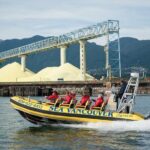
Water on this route feels like Vancouver’s secret. From Granville Island, you ride a zodiac out through the harbor and up the glacial Indian Arm fjord, then circle back past the city with the Granite Falls views right up close. It’s a fast, scenic way to see how Vancouver sits between ocean, mountains, and rock.
I love the on-water perspective. You don’t just look at cliffs and shorelines; you feel the ocean air on your face as the boat pushes deeper into the fjord, with guides calling out the geology and local history along the way. If you end up with a captain like Captain Marco (names like Cassie, Alec, and Captain Ray show up often too), the commentary can turn ordinary scenery into a story you can actually picture.
One consideration: this tour runs rain or shine, and zodiac speed can make it feel chilly even with provided gear. It also isn’t suitable for everyone, including people with recent surgeries, pre-existing medical conditions, or back problems, and it’s not for pregnant travelers.
In This Review
- Key things to know before you go
- From Granville Island Harbor to English Bay in a Zodiac
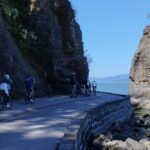
- Stanley Park and the Seawall: Seeing Vancouver’s “edge” from water level
- Under the Lion’s Gate Bridge: North Shore views and shipping reality
- Siwash Rock to Deep Cove: Granite cliffs, waterfalls, and fast-changing angles
- Indian Arm fjord: the moment the air changes
- Granite Falls up close: why timing and spray matter
- Wildlife and photo moments on a 3-hour timeline
- Suits, sea conditions, and who should think twice
- Price and value: $116 for three hours of real scenery
- When this tour is a great fit (and when it isn’t)
- Should you book the Indian Arm and Granite Falls zodiac tour?
- FAQ
- Where is the meeting point?
- How long is the tour?
- What does the price include?
- Is hotel pickup or drop-off included?
- Do I need to bring food or drinks?
- Does the tour run in bad weather?
- Is there a live guide?
- What’s the cancellation window?
- Is the tour wheelchair accessible?
- Who should not take this tour?
Key things to know before you go
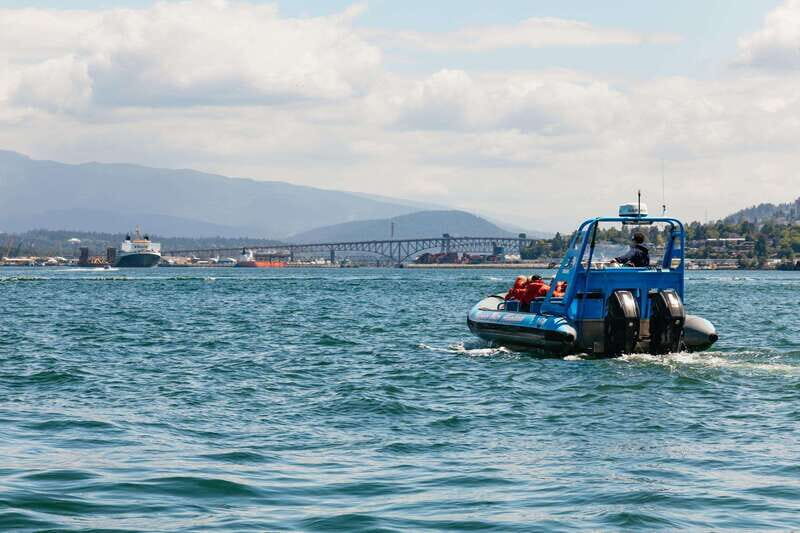
- Small-boat feel: Zodiac seating keeps the group closer and the ride more personal than big tour vessels.
- You get the fjord experience, not just the postcard look: Indian Arm’s glacial setting is the star of the show.
- Guide-led geography: You’ll hear how British Columbia’s coastline and rock formations shaped what you see.
- Granite Falls is the payoff: Expect a near, waterfall-focused moment rather than a distant viewpoint.
- Weather won’t pause the adventure: Plan for rain, spray, and wind, even on clear days.
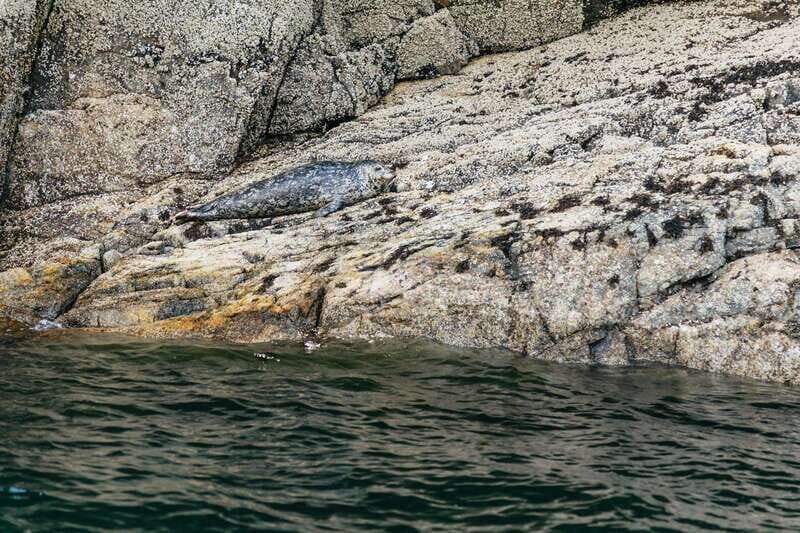
- Wildlife sightings are possible: Harbor seals, eagles, and other ocean visitors may show up when conditions cooperate.
From Granville Island Harbor to English Bay in a Zodiac
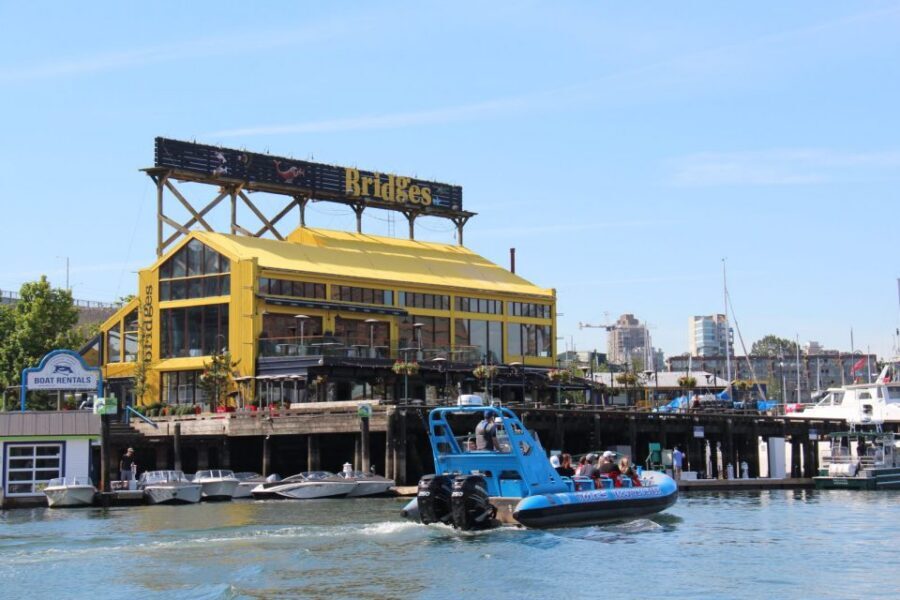
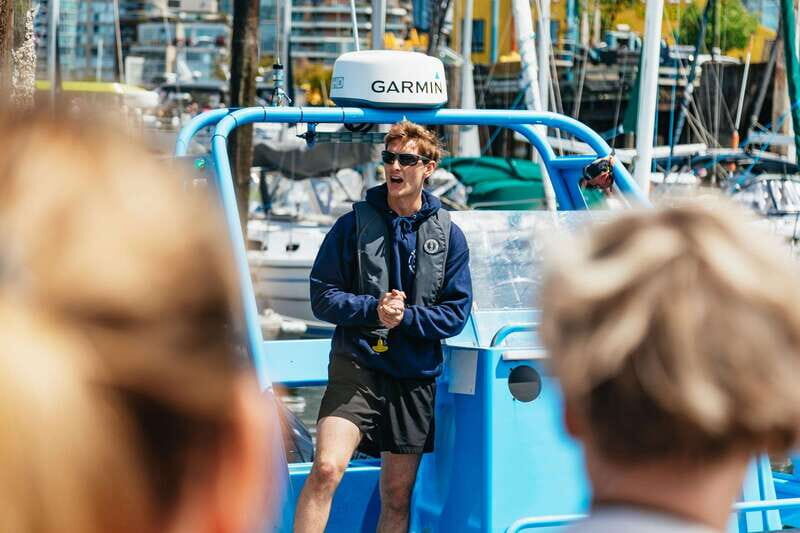
Your day starts at Vancouver Water Adventures near Granville Island. Arrive about 30 minutes early so you can get outfitted with the survival suits and lifejackets and get briefed on safety procedures before departure. That head start matters here because the boat runs on a tight 3-hour schedule, and once you’re moving, there isn’t much time to “catch up.”
From the water, Granville Island looks different fast. You’ll glide past the harbor scene with the city layered behind you—then you slide toward English Bay, where the long beachfront feel and the ocean-sky colors show up in a way street photos can’t quite capture. It’s also a great opening leg because you can acclimate to the zodiac’s motion before the ride gets more dramatic.
One thing I appreciate: the early portion isn’t just transit. You’re already gathering context for later—where the coast bends, how the shorelines are cut by rock, and why Vancouver’s neighborhoods feel built around water access.
You can also read our reviews of more boat tours in Vancouver
Stanley Park and the Seawall: Seeing Vancouver’s “edge” from water level
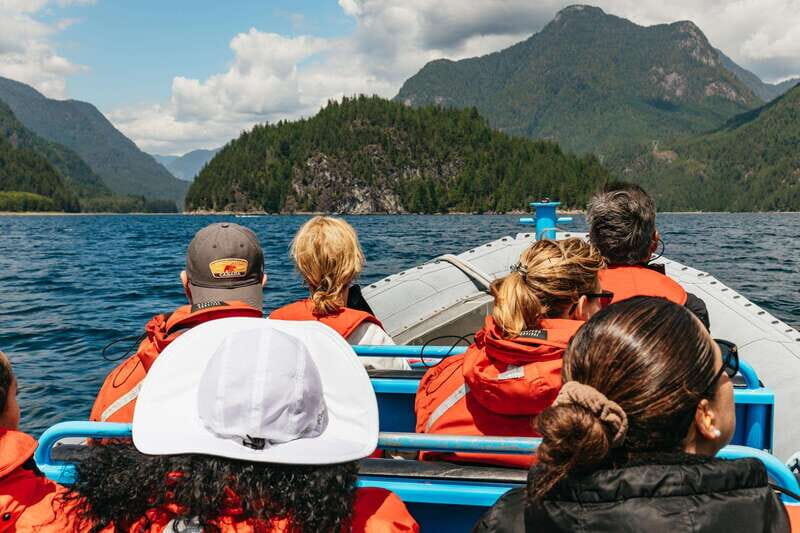
As you pass Stanley Park, you trade walking-path viewpoints for something sharper: shoreline angles and tree-lined banks you’d miss while staying on land. The narration typically covers the seawall and the way this coast is engineered to handle tides, weather, and storm surges—so you understand what you’re seeing rather than just admiring it.
Keep an eye on the mix of older trees described for this stretch—cedars, pines, and oak. From the water, the park doesn’t read as a single “forest chunk.” It looks like a stitched boundary between city development and the wild face of British Columbia’s coast.
Practical note: if you’re sensitive to wind, this is where you’ll feel it first. The boat’s forward motion brings gusts straight at you, even when the sky looks calm. A survival suit helps, but you’ll still want to keep your posture steady for comfort.
Under the Lion’s Gate Bridge: North Shore views and shipping reality
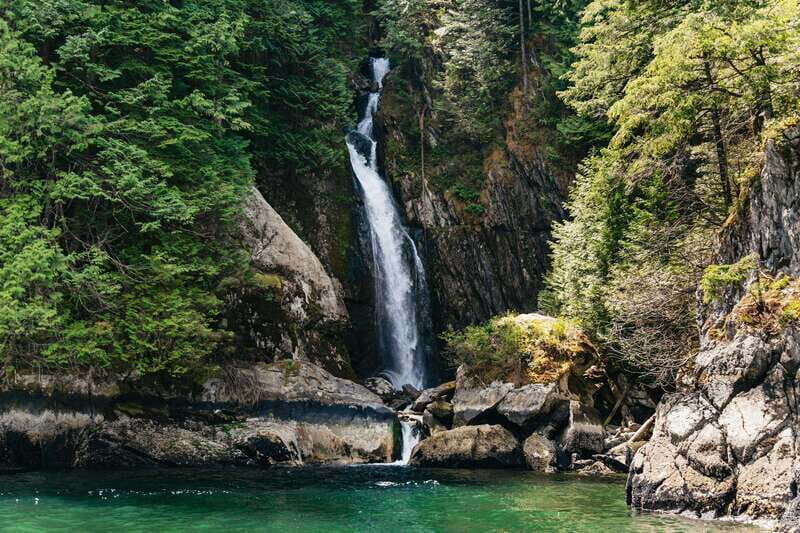
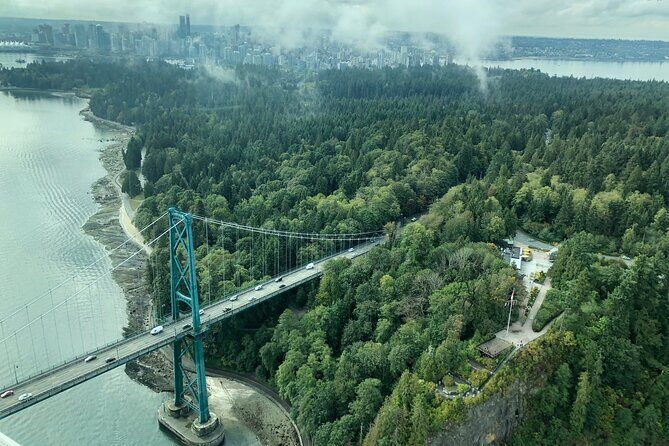
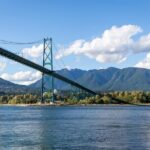
One of the most iconic moments comes when you go underneath the Lion’s Gate Bridge. It’s not just a landmark—under-bridge passages create a visual “frame” where North Shore mountains stack behind the steel. You’ll also get a better sense of scale: Vancouver’s geography doesn’t sit quietly in the background. It’s built right into travel routes and daily life.
This part of the ride also points out Seaspan and the fact that Vancouver functions as a major international shipping port. That detail matters because it changes how you read the city’s waterfront. You’ll still be thinking waterfalls and cliffs, but you’ll also understand the working ocean underneath it.
As you continue, you head toward the Siwash Rock area. The scenery there is defined by granite cliffs and the kind of waterfall action you can only appreciate from the right angle. Some departures may even include a few extra surprises, like brief wildlife sightings, as you work your way along the coast.
Siwash Rock to Deep Cove: Granite cliffs, waterfalls, and fast-changing angles
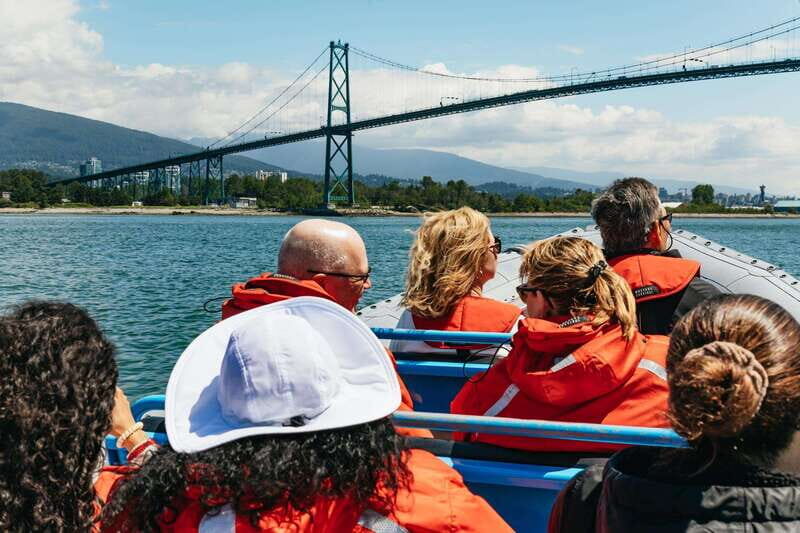
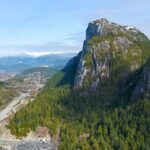
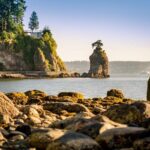
Siwash Rock is one of those Vancouver features that feels simple on land, then becomes more complex from the water. You’re close enough to see how the rock face and shoreline shape water movement, and the guide’s storytelling typically ties those features back to local geology and history.
You may catch glimpses toward Deep Cove as the route opens views north. Even when you can’t see every detail, the coastline’s curve gives you a sense of where recreation and residential neighborhoods sit relative to the rugged shoreline. It’s a good reminder that the water isn’t just scenic; it’s part of the region’s living map.
This segment is also where the zodiac’s speed can feel most noticeable. The ride feels lively, not like a slow sightseeing cruise. That’s a plus if you like getting places fast and getting the best angles before conditions shift.
Indian Arm fjord: the moment the air changes
Then you hit the glacial fjord of Indian Arm, and the whole experience changes pace and mood. Ocean air turns sharper and cooler as the water narrows and the mountains hold the view. Even if the sky is gray, the light off the water can still look dramatic once you’re surrounded by steep walls.
This is the tour’s core because you’re not just seeing a viewpoint—you’re traveling up a fjord-like environment shaped by glaciation. The guide’s geology context helps you understand why the rock and shoreline feel the way they do. You’ll likely hear how these features relate to the broader story of British Columbia’s landscape and coast.
Expect water texture too. Fjords can feel calmer than open harbor, but zodiac motion still gives you that front-row experience. You’ll feel the boat working, and you’ll hear and see how water moves along the cliffs.

Granite Falls up close: why timing and spray matter
Granite Falls is the payoff, and it’s worth going in with the right expectation. This isn’t a gentle, distant “look at a waterfall” moment. The ride is designed to bring you near the falls so you can see the flow and the way water drops off granite and feeds down the shoreline.
On some departures, you may also get playful moments like doughnuts in the water. That’s not the reason to book—Granite Falls is. But it’s the kind of added fun that fits the zodiac style and helps the trip feel more like an outing than a checklist.
Water spray can be part of the deal. Even on warmer days, fast movement can bring wet mist. The provided survival suits help you stay comfortable, but they won’t make you bulletproof against everything, especially with wind.
If you’re building your photos: plan to shoot early and often in this segment. The boat repositioning can create great angles, but you won’t be parked long. You’ll get multiple chances, just not long enough to take everything at a relaxed walking pace.
Wildlife and photo moments on a 3-hour timeline
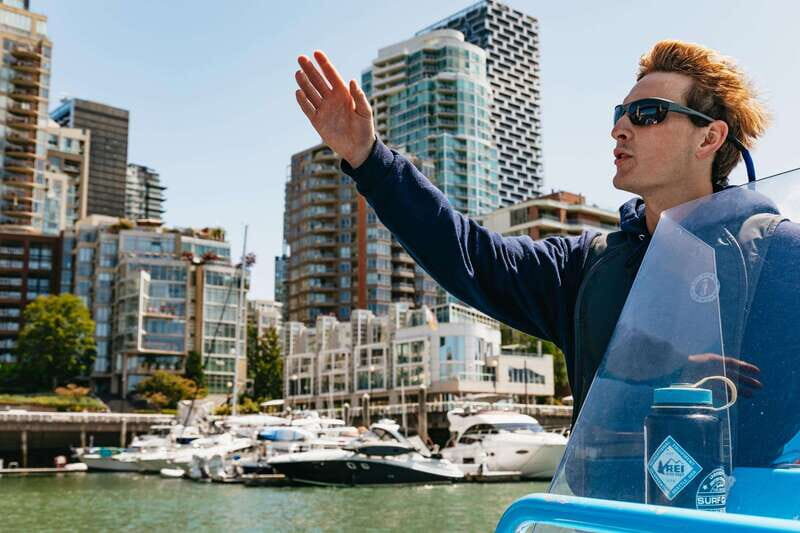
This is a tight 3-hour outing, so you’re balancing speed with stops. That’s why it works: you see a lot of coast without losing half a day on logistics. And it’s also why the guides keep moving when the best views are available.
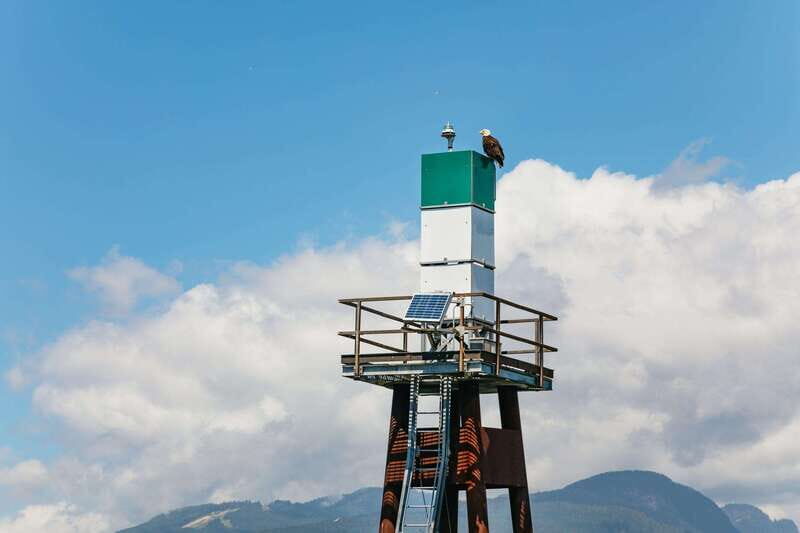
Wildlife sightings aren’t guaranteed, but they’re frequent enough that you should come prepared. People have reported harbor seals, eagles (including a bald eagle), jellyfish, and even a few surprise moments like an orca sighting in the harbor area on the way back. The guide usually helps by spotting things and pointing them out at the right time, which is huge when animals are far away.
For photos, bring a plan:
- If you want skyline shots, prioritize the harbor and English Bay segments.
- If you want granite-and-water angles, focus around Siwash Rock and Granite Falls.
- For wildlife, keep your camera ready rather than waiting to react.
Also, bring binoculars if you have them. One common theme is that animals can be spotted at distances where details are easier with optics.
Suits, sea conditions, and who should think twice
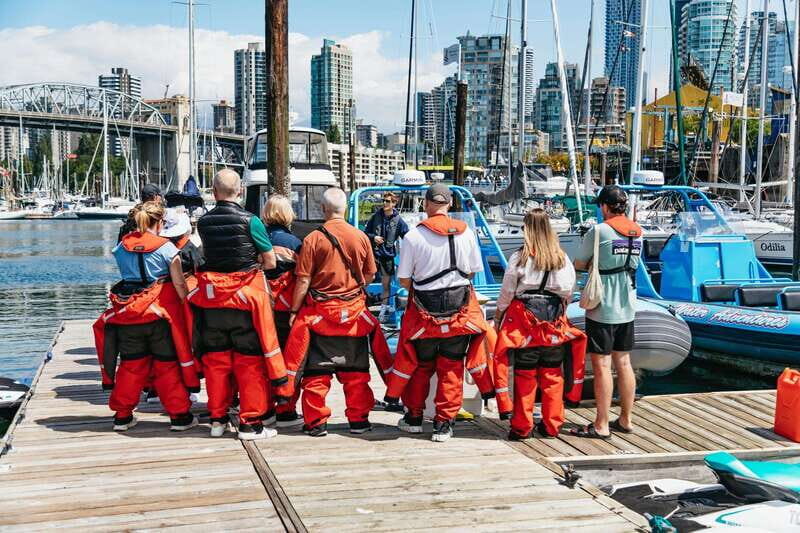
This is a water ride, and conditions can shift quickly. The tour runs rain or shine, so you should expect wind, spray, and occasional chill—especially when you’re moving. The survival suits and lifejackets are included, and that makes a big difference in comfort. People have even noted that suits folded at the waist when it’s warmer can still help you stay warm without feeling trapped in bulky gear.
Still, be realistic about motion and time at sea. A zodiac is a smaller vessel, so you feel the ride more than you would on a bigger boat. Some days come with bigger swells on the return, and you might get a bit wet.
This matters for health and comfort. The tour isn’t suitable for pregnant travelers, people with back problems, people under 3 ft 9 in (120 cm), people with pre-existing medical conditions, or those who’ve had recent surgeries. If any of those apply, this may not be the right Vancouver water experience for you.
If you’re prone to seasickness, you’ll want to consider how you usually handle boat rides. Nothing in the provided info says it’s always calm, and some departures have been described as having swell on the way back.
Price and value: $116 for three hours of real scenery
At $116 per person for a 3-hour zodiac tour, the value is mostly about what you’re buying: proximity and perspective. You’re not paying for a long, slow cruise that stays distant from the coast. You’re paying for an up-close route—Indian Arm fjord and Granite Falls—plus guide-led context that helps you understand what you see.
A few things make the price easier to swallow:
- You’re on the water quickly with no hotel pickup included, so your time and money go straight to the ride.
- The guide is live and in English, and the narration isn’t just “here’s a view” but also geology and local history.
- You get included lifejackets and survival suits, which cuts down on what you’d otherwise need to bring for cold-and-spray comfort.
What’s not included is food and drinks. That means you should plan to eat before you go or after you’re dropped back at Granville Island. If you’re doing this as part of a Vancouver day, build in a meal buffer because you’ll want warm food after you’re done.
When this tour is a great fit (and when it isn’t)
This is a strong match if you want:
- Big scenery in a short time
- A water-level look at Stanley Park, English Bay, and North Shore views
- Indian Arm and Granite Falls as the main event, not just a side stop
- A guide narration style that ties what you see to how British Columbia’s coast formed
It’s also a good choice if you hate waiting around. The ride has a clear flow—out through the harbor, up toward the fjord and falls, then back via more shoreline views.
It’s not a great fit if:
- You need gentle, fully sheltered boat comfort.
- You have health limitations listed by the operator (pregnancy, back problems, medical conditions, recent surgery).
- You’re under the height requirement (120 cm / 3 ft 9 in).
- You prefer long time at a single site rather than multiple coasts and angles.
If you’re traveling with someone who loves photography or nature spotting, this gives you a lot of “different looks” per hour. It’s also a memorable way to break up a typical city day.
Should you book the Indian Arm and Granite Falls zodiac tour?
I think you should book if your ideal Vancouver day includes cold-air views, granite cliffs, and the feeling of going somewhere you can’t see from the boardwalk. The combination of Indian Arm fjord access, a close Granite Falls moment, and strong guide storytelling makes it feel like more than scenery—it feels like understanding the place.
I’d hesitate only if you fall into one of the listed suitability groups, or if you want a totally dry, low-motion experience. In that case, you’ll likely be happier with a different style of boat ride.
If you’re okay with rain or wind, and you like active sightseeing, this tour is a smart use of time—and a solid value for what you get for three hours on the water.
FAQ
Where is the meeting point?
You meet at Vancouver Water Adventures. The info also says to arrive 30 minutes early so you can be fitted with the appropriate gear and go over safety procedures.
How long is the tour?
The duration is 3 hours.
What does the price include?
The included items are the driver/guide, the zodiac boat tour, and survival suits and lifejackets.
Is hotel pickup or drop-off included?
No. Hotel pickup or drop-off is not included. You’ll be dropped back at Granville Island.
Do I need to bring food or drinks?
Food and drinks are not included, so plan to eat before or after the tour.
Does the tour run in bad weather?
Yes. This tour runs rain or shine.
Is there a live guide?
Yes. There is a live tour guide in English.
What’s the cancellation window?
Cancellation is free up to 24 hours in advance for a full refund.
Is the tour wheelchair accessible?
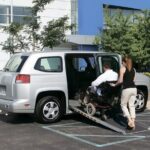
The activity is listed as wheelchair accessible.
Who should not take this tour?
It’s not suitable for pregnant women, people with back problems, people under 3 ft 9 in (120 cm), people with pre-existing medical conditions, or people who’ve had recent surgeries.